
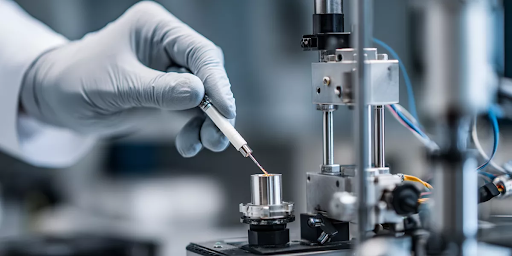
Modern manufacturing is changing rapidly as industries adopt automation, electrification, digital monitoring, and advanced process control. These shifts place new demands on materials that must endure heat, chemicals, vibration, and continuous mechanical stress without performance degradation.
Among today’s high-performance materials, alumina ceramic tubes have become widely used in semiconductor tools, automation equipment, laboratory instruments, and high-temperature processing systems. Their durability, purity, and electrical insulation reflect a broader trend: factories are seeking materials that deliver long service life and consistent reliability.
As production technologies evolve, several key innovations are accelerating the adoption of advanced ceramics across industrial sectors. Below are five trends that are shaping material choices in modern equipment design.
1. Automation and Equipment Miniaturization
Global manufacturers are increasingly pushing for faster, smaller, and more precise machines as industrial automation accelerates worldwide. Production systems must combine high productivity with compact footprints, and every component must function reliably under continuous cycles.
Automation creates several engineering challenges:
- Higher mechanical loads within smaller components
- Increased thermal concentration due to compact assemblies
- Electrical insulation needs around sensors, heaters, and high-voltage circuits
- Reduced tolerance for failure because downtime is costly
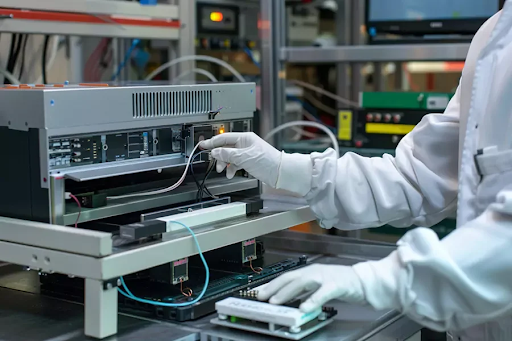
Advanced ceramics, particularly alumina, offer advantages in all of these areas. Their low thermal expansion helps maintain dimensional accuracy, while their dielectric strength supports integration around electronic components. Unlike metals, ceramics do not introduce electrical interference, which benefits signal stability in sensors and measurement devices.
Miniaturized automation systems—pick-and-place tools, micro-motion actuators, compact pumps, inspection equipment—also rely on materials with long wear life. Ceramic tubes, bushings, and insulators help ensure consistent operation even in environments involving repetitive motion or exposure to lubricants, coolants, and process chemicals.
These requirements continue to rise as manufacturers seek higher throughput and reduced equipment size.
2. High-Temperature Electrification and Thermal Processing
As industries shift toward cleaner and more efficient electrified heating systems, components now face higher and more consistent thermal loads than before. Traditional combustion-based heating is gradually being replaced by electric furnaces, induction systems, and precision-controlled thermal processes.
High-temperature industries—materials processing, analytical instrumentation, heat treatment, energy conversion—depend on materials that can maintain structure and stability above 1000°C.
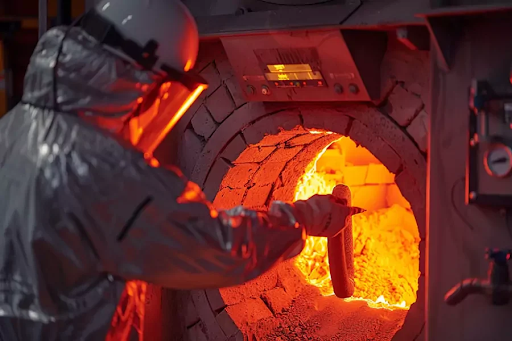
Advanced ceramics support this shift through:
- Stable thermal conductivity for controlled heating and cooling
- Resistance to chemical attack in oxidizing or corrosive atmospheres
- Low thermal shock susceptibility compared to common refractory materials
- Minimal contamination, enabling use in clean production environments
As electrification expands in metallurgy, chemical processing, and semiconductor equipment, ceramic tubes and shields are increasingly used to isolate heating elements, guide gas flows, and protect sensors.
A major advantage is that ceramics do not deform or oxidize like metals under high heat. This characteristic extends service life and reduces the frequency of component replacements, contributing to greater system stability and lower operational cost.
The trend toward electrified processing is expected to continue as industries prioritize energy efficiency and emission reduction.
3. Advanced Manufacturing in Semiconductor and Analytical Industries
With global demand for semiconductors and analytical instruments continuing to rise, production lines require components that remain stable under strict process conditions. Semiconductor fabrication environments involve plasma exposure, reactive gases, vacuum chambers, and rapid thermal cycling—all of which challenge conventional materials.
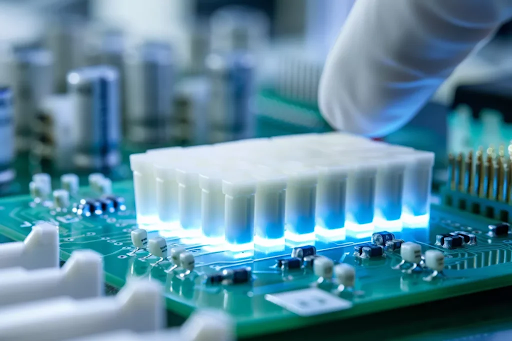
Advanced ceramics, especially high-purity alumina, are widely used in:
- Wafer handling and alignment
- Thermal insulation structures
- Plasma-facing components
- Precision spacers and isolation tubes
- Chemical-resistant fixtures
- Gas and fluid delivery systems
Their chemical inertness helps prevent cross-contamination, which is essential for maintaining device yield in semiconductor production. Their rigidity ensures that fixtures and supports retain shape during high-temperature operations.
Analytical instruments—mass spectrometers, thermal analyzers, spectroscopy systems—also rely on ceramic components for consistency and low background interference. Ceramic tubes and rods maintain structural stability across repeated heating cycles in laboratory environments.
As analytical instruments become more sensitive and semiconductor nodes continue shrinking, material purity and dimensional precision grow in importance. Advanced ceramics provide a foundation for the next generation of high-performance scientific and electronic equipment.
4. Robotics, Sensors, and Motion Systems
Robotics adoption is accelerating across manufacturing, logistics, medical equipment, and product inspection. Robotic joints, end-effectors, and sensor housings must tolerate friction, heat, and dynamic loads while maintaining precision.
Advanced ceramics are increasingly selected for:
- Wear-resistant bushings and sleeves
- Electrical isolation around motors and actuators
- High-rigidity components that minimize deflection
- Housings that protect temperature-sensitive sensors
Ceramics provide hardness and oxidation resistance that allow them to perform reliably in demanding environments. For example:
- In high-speed pick-and-place robots, ceramic components reduce wear and maintain accuracy.
- In inspection systems, ceramic insulators shield delicate sensors from electrical noise.
- In food, pharmaceutical, or cleanroom environments, ceramics help meet contamination control requirements.
Motion systems also benefit from the low friction and stable geometry of ceramic elements. Components support long operating cycles without the wear patterns commonly seen in metals or polymers.
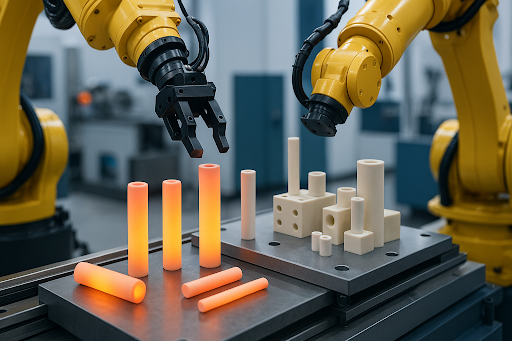
As robots become faster, lighter, and more autonomous, material reliability plays an increasing role in overall system performance.
5. Increased Industry Focus on Durability and Low Maintenance
As factories scale output and reduce downtime, material reliability has become a core part of long-term equipment planning. Every unexpected failure in processing, measurement, or high-temperature systems can disrupt workflow and increase costs.
Advanced ceramics address these challenges through:
- High wear resistance, particularly in abrasive or corrosive environments
- Minimal deformation, maintaining tight tolerances during long-term use
- Stable dielectric properties, even after prolonged exposure to heat or chemicals
- Corrosion resistance, useful in chemical processing, pumping, and fluid control
These characteristics reduce replacement frequency and support long maintenance cycles. For industries that rely on continuous operations—whether in chemical equipment, automation systems, energy processing, or laboratory instruments—stable materials directly contribute to productivity.
A growing number of equipment designers now evaluate material choices based on long-term lifecycle performance rather than initial cost alone. This shift reinforces the demand for ceramic tubes, rods, plates, and insulators in applications where longevity is a priority.
Conclusion
Advanced ceramics are becoming increasingly important across manufacturing sectors due to their reliability, thermal stability, and resistance to harsh operating conditions. As automation, electrification, robotics, and precision manufacturing continue to develop, ceramic components will play an expanding role in enabling performance improvements.
For industries evaluating material options, high-purity alumina ceramics remain a dependable choice for demanding mechanical, electrical, and thermal environments. Learn more about industrial-grade ceramic solutions at ADCERAX alumina ceramic components.

