
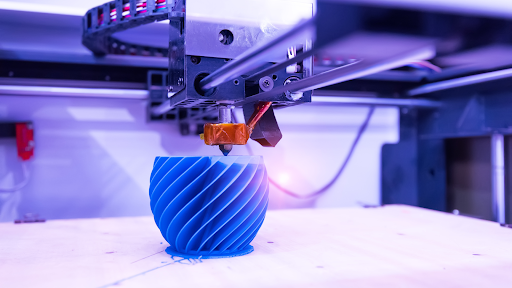
Industrial design is evolving fast, and 3D printing is leading the charge. At the forefront of this transformation are advanced manufacturing partners, helping companies rethink how products are developed, prototyped, and produced.
With the ability to create complex geometries, reduce lead times, and cut tooling costs, 3D printing services are empowering designers to move from concept to market faster than ever. From customized jigs and fixtures to end-use parts in aerospace, medical, and consumer industries, additive manufacturing is unlocking new levels of speed, precision, and innovation.
In this article, we’ll explore how 3D printing is reshaping the industrial design process and how service providers are helping businesses stay agile and ahead of the curve.
The Evolution of Manufacturing Through Digital Innovation
The shift from traditional manufacturing to additive processes represents more than just technological advancement. It’s fundamentally changing how industrial designers approach problem-solving and product development. 3d printing services have emerged as the bridge between creative vision and physical reality, offering capabilities that seemed like science fiction just a decade ago.
Traditional manufacturing often forces designers to compromise their vision due to production limitations. Injection molding requires expensive tooling, CNC machining wastes material, and assembly processes add complexity. Additive manufacturing flips this script entirely. Instead of subtracting material from a larger block, layers build up to create the final product. This process eliminates many constraints that previously limited design possibilities.
The transition hasn’t been instant, but it’s been decisive. Companies that once relied solely on conventional methods now integrate 3d printing companies into their workflows. The result? Designs that were previously impossible become not just feasible but economically viable.
Speed and Efficiency
Remember when getting a prototype meant waiting weeks or months? Those days are vanishing fast. Modern online 3d printing service providers can deliver parts in hours, not weeks. This acceleration affects every aspect of industrial design, from initial concept validation to final product refinement.
The speed advantage extends beyond just faster delivery. Design iterations happen more frequently, leading to better products. When testing a new concept costs less and takes minimal time, designers naturally experiment more. This iterative approach often results in breakthrough innovations that might never have emerged under traditional timelines.
Breaking Design Barriers
Complex internal geometries, impossible-to-machine features, and intricate surface textures are no longer obstacles. 3D printing service online platforms enable designers to create parts with internal channels, honeycomb structures, and organic shapes that would be impossible or prohibitively expensive using conventional methods.
This freedom isn’t just theoretical. Aerospace companies now design lighter components with internal lattice structures. Medical device manufacturers create patient-specific implants with perfect anatomical fits. Consumer product designers experiment with ergonomic features that would have been unthinkable with traditional manufacturing.
How Professional Services Are Changing the Game
The democratization of advanced manufacturing through professional services has leveled the playing field. Small startups can now access the same manufacturing capabilities as multinational corporations, fundamentally changing competitive dynamics in industrial design.
Accessibility for All Business Sizes
Previously, advanced manufacturing required massive capital investment. Industrial-grade equipment, specialized technicians, and dedicated facilities were barriers that only large corporations could overcome. Custom 3d printing services have eliminated these barriers, making sophisticated manufacturing accessible to businesses of all sizes.
A small medical device startup can now prototype complex designs without investing millions in equipment. An automotive parts supplier can test new concepts without building expensive tooling. This accessibility has sparked innovation across industries, with smaller companies often outpacing larger competitors in terms of creativity and speed.
Specialized Expertise and Equipment
Professional service providers bring more than just equipment to the table. They offer expertise in material selection, process optimization, and quality control that would take years to develop in-house. This knowledge transfer benefits industrial designers who can focus on design rather than manufacturing intricacies.
The equipment diversity available through professional services is staggering. From high-resolution stereolithography for detailed prototypes to selective laser sintering for functional parts, designers can choose the perfect process for each application. This variety would be impossible for most companies to maintain internally.
Quality Control and Consistency
Professional service providers implement rigorous quality control systems that ensure consistent results. This reliability is crucial for industrial designers who need predictable outcomes for their projects. The combination of standardized processes and experienced operators delivers results that meet or exceed traditional manufacturing quality standards.
Quality extends beyond just dimensional accuracy. Surface finish, material properties, and structural integrity all benefit from professional oversight. This consistency allows designers to confidently specify printed parts in their designs, knowing they’ll receive reliable results.
The Business Benefits You Can’t Ignore
The financial and operational advantages of integrating these services into industrial design workflows are substantial. Companies that embrace this technology often see immediate improvements in multiple areas of their operations.
Cost Reduction and Material Savings
Traditional manufacturing often requires significant material waste, especially in subtractive processes. Additive manufacturing uses only the material needed for the final part, plus minimal support structures. This efficiency translates directly into material cost savings.
The elimination of tooling costs for low-volume production runs provides another significant advantage. Traditional manufacturing requires expensive molds, dies, and fixtures that must be amortized across production runs. Additive manufacturing eliminates these costs, making small batch production economically viable.
Faster Time-to-Market
Speed to market can make the difference between success and failure in today’s competitive environment. The ability to move from concept to prototype to production without traditional manufacturing delays provides a significant competitive advantage.
Design validation happens faster when physical prototypes can be produced quickly and affordably. This speed enables more thorough testing and refinement, ultimately resulting in better products. The compressed timeline also allows companies to respond more quickly to market opportunities.
Sustainable Manufacturing Practices
Environmental considerations increasingly influence industrial design decisions. Additive manufacturing’s material efficiency and reduced waste production align with sustainability goals. Additionally, the ability to manufacture closer to the point of use reduces transportation requirements and associated emissions.
The technology also enables design for disassembly, where products can be designed to be easily separated into recyclable components at the end of life. This circular design approach becomes practical when manufacturing constraints don’t limit design possibilities.
Wrapping Up the Future of Industrial Design
The transformation of industrial design through advanced manufacturing services represents more than technological evolution; it’s a fundamental shift in how we approach creation itself. The barriers that once separated imaginative design from practical manufacturing continue to crumble, opening possibilities that previous generations of designers could only dream about.
This revolution isn’t slowing down; it’s accelerating. The companies and designers who embrace these capabilities today will define tomorrow’s standards. The question isn’t whether this technology will reshape your industry; it’s whether you’ll be leading that transformation or scrambling to catch up.
Your Questions About 3D Printing in Industrial Design
How can 3D printing revolutionize the manufacturing industry?
3D printing uses material efficiently during the printing process, allowing companies to utilize only the amount needed for each product. This waste reduction helps lower material costs and supports environmental sustainability goals.
In what ways do advancements in 3D printing technology contribute to innovation in various industries?
Key innovations include personalization capabilities, sustainable manufacturing practices, medical device advancements, and integration with automation systems. These developments enable previously impossible design solutions across multiple sectors.
Which industries benefit most from 3D printing services?
Healthcare, aerospace, automotive, and consumer products lead adoption. Each industry leverages unique capabilities: healthcare uses customization, aerospace values weight reduction, automotive appreciates rapid prototyping, and consumer products exploit personalization opportunities.

