
When people think of aerospace technology, their minds usually jump to wings, jet engines, or advanced materials. But inside those powerful systems are components that do the quiet, often overlooked work. Worm gears fall squarely into that category. They may not be glamorous, yet their role in aerospace systems is essential for precision, efficiency, and safety.
So why should aerospace engineers and procurement specialists pay closer attention to worm gears? Let’s break it down.
What Makes Worm Gears Unique
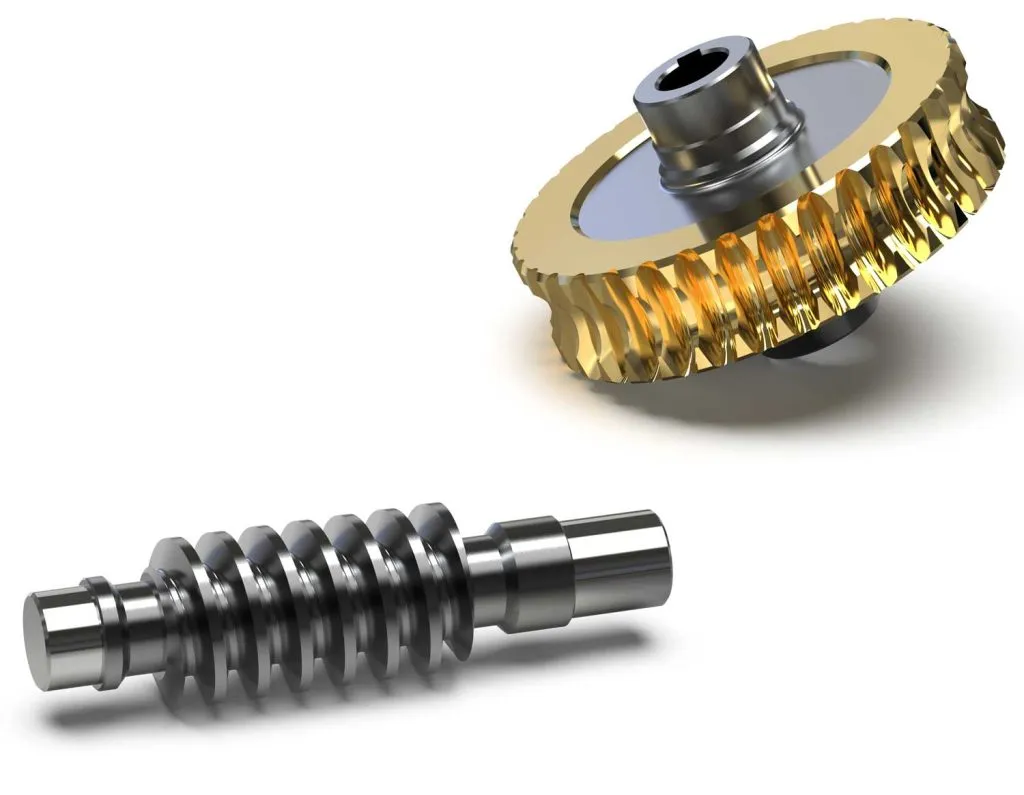
Worm gears stand apart because of their geometry. A worm gear set consists of a threaded shaft (the worm) that meshes with a gear (the worm wheel). This design produces high torque output while allowing significant speed reduction in a compact footprint.
That compact efficiency is especially valuable in aerospace, where space is limited, weight savings are critical, and every cubic inch of design must be justified. Unlike spur or bevel gears, worm gears can achieve high reduction ratios in a single stage, which makes them highly effective for specific aerospace functions.
Advantages That Matter in Aerospace
Aircraft systems demand components that can perform under harsh conditions, and worm gears bring several advantages to the table:
- High reduction ratios in limited space: Ideal for applications where designers need significant speed reduction without adding bulk.
- Self-locking capability: Depending on the lead angle, worm gears can hold loads in place without a separate braking system. That’s a huge benefit for actuators and positioning systems.
- Smooth and quiet operation: Noise and vibration reduction are critical in aerospace, not just for passenger comfort but also for protecting sensitive equipment.
- Shock resistance: The sliding action between the worm and the wheel helps absorb shocks, extending service life in high-stress environments.
In short, worm gears deliver reliability in areas where other gear types might struggle.
Where Do Worm Gears Show Up in Aircraft?
Worm gears may not dominate the spotlight, but they quietly support multiple aerospace systems:
- Flap and slat actuators: ensuring precise positioning of control surfaces
- Landing gear systems: offering secure, controlled retraction and extension
- Seats and cabin equipment: adjusting pilot seats or passenger features smoothly and safely
- Auxiliary systems: driving pumps, hoists, and ground-support mechanisms
Each of these applications benefits from worm gears’ combination of torque, stability, and self-locking ability. For example, a worm gear system in a flap actuator prevents back-driving, which is crucial for maintaining aerodynamic stability.
Procurement: Looking at the Bigger Picture
For procurement specialists, worm gears aren’t just another component to source. Supplier choice has direct consequences for system performance, safety compliance, and maintenance schedules. AS9100-certified manufacturers provide the assurance that worm gears meet rigorous aerospace standards.
Here’s the reality: unit cost only tells part of the story. The true expense comes from downtime, unexpected repairs, and safety checks. A low-cost gear that wears prematurely could ground an aircraft, cause cascading delays, and inflate maintenance budgets. A proven, high-quality worm gear manufacturer delivers long-term savings through reliability and consistent performance.
For aerospace operators, that trade-off isn’t theoretical. It’s operational.
Noise, Comfort, and the Human Element
Passengers rarely think about gears, yet they feel the results. Smooth, low-noise operation is one of the reasons modern aircraft cabins are quieter than older designs. Worm gears play a role here by minimizing vibration and mechanical chatter in systems such as cabin equipment and seating mechanisms.
While this might sound secondary compared to flight-critical functions, passenger comfort has become a competitive edge. Airlines increasingly measure value not just in miles flown but in passenger experience. And yes, something as modest as a worm gear contributes to that perception.
Technology Trends and What’s Next
Worm gear technology is advancing alongside other aerospace components. Engineers are experimenting with advanced materials like high-performance alloys and composites to reduce weight while maintaining durability. Additive manufacturing techniques are beginning to allow more complex geometries, tighter tolerances, and custom designs suited for specific aircraft models.
There is also growing interest in integrating sensors for condition monitoring. Embedding smart technologies into worm gear assemblies could make predictive maintenance a standard practice, identifying wear patterns before they cause downtime. It is a step toward smarter, safer aerospace systems.
Trade-offs to Consider
Every engineering decision comes with trade-offs. Worm gears, for all their strengths, are not the most efficient in terms of power transmission because of the sliding contact between the worm and wheel. That sliding creates heat and requires effective lubrication.
But in aerospace, where safety, stability, and reliability take priority, engineers accept this compromise. The advantages of torque multiplication, compact design, and self-locking ability often outweigh efficiency losses, particularly in critical applications.
Why Worm Gears Still Matter
At the core of aerospace engineering lies trust: trust in equipment, trust in suppliers, and trust in performance. Worm gears, though often overlooked, play a central role in that chain of trust. They secure systems, stabilize functions, and provide the torque that keeps aircraft safe and controllable.
Looking ahead, as the industry explores electric propulsion, lightweight aircraft, and even autonomous flight, worm gears will continue to earn their place. They may be small, but without them, some of aerospace’s most important systems would simply not function.

