
Welding has long been instrumental in industrial fabrication, but many ongoing innovations further what people can achieve, resulting in better quality, higher productivity rates and other measurable benefits. What are some of the most innovative metal fabrication trends, and what is their potential for industry professionals?
1. Artificial Intelligence
AI has rapidly transformed numerous industries and activities, including welding innovations. Although many discussions about the technology center on whether it will replace people’s jobs, some of the most effective applications feature welders working alongside AI to accomplish more than they could without it. Those employees can then devote more attention to high-value tasks, leaving the technology to handle the repetitive duties.
Some AI applications also help fabrication shops handle ongoing labor shortages, especially when they must fulfill increasingly large orders and need time to find and hire appropriate individuals for open positions. In such cases, the technology does not entirely replace workers, but it provides busy facilities with additional flexibility.
For example, the automaker Audi uses an AI-supported quality-check system in its production body shops. The specialty application uses AI to identify possible weld splatter on car undercarriages. Although employees previously did those inspections manually, assigning the duty to AI increases safety and ergonomics for workers, elevating their well-being.
2. Digital Twins
Digital twins help simulate virtual, highly realistic versions of real-life products, locations and components. Some decision-makers also use them to study broader concepts, such as proposed supply chain routes or anticipated weather patterns. These tools enable users to run simulations in controlled environments, analyzing which factors have the most impact on the outcome.
Manufacturers were among the earliest adopters of digital twins because they frequently relied on them to assess potential products before launching full-scale production runs. Many now also bring digital twins into welding environments. Doing so allows them to simulate specific conditions to verify that different welds will withstand the anticipated stresses.
In one fascinating case, NASA developed a digital twin to assess how well one-shot welding methods hold up in space. The researchers identified several challenges, including the fact that very low temperatures degrade materials with high thermal conductivity, making it harder to create strong, flaw-free welds. They combined aspects, such as multiscale models and physics-informed machine learning, to create the first real-time digital twin platform that evaluates welding processes under extreme space and lunar conditions.
3. Data Analytics
The leaders of many industrial facilities use data analytics platforms to uncover trends, track changes and identify areas of improvement. These opportunities allow them to move away from guesswork toward guidance provided by trustworthy information.
Welders using specialized equipment melt and permanently join at least two metals. Numerous factors combine to determine the overall quality. These factors include the structural design of the welded joint, whether the operator follows recommended processes to prevent defects and the suitability of the material. Data analytics can help drive continuous improvement in all of these areas. Managers can also use the statistics to assess how well welding professionals craft items that meet stringent requirements.
A group working at a naval shipyard applied their skills to make specially designed containers for transporting components of decommissioned, nuclear-powered vessels, including submarines. The general foreman used ultrasonic and radiographic equipment to confirm there were no rejectable conditions on the volumetrically inspected weld joints associated with one of the products. Tracking such successes in a data analytics platform increases morale and enables decision-makers to flag and address potential issues sooner.
4. Virtual and Augmented Reality
Welders need hours of dedicated training to develop and maintain their skills. Virtual and augmented reality are technologies that enable individuals to receive valuable training without the downsides associated with traditional education, such as material consumption and safety risks that can arise from costly or dangerous mistakes due to inexperience.
Research associated with virtual reality also suggests that people using it to learn complex tasks achieve knowledge retention rates of up to 80%, compared to 20% in traditional learning formats. That is likely because students can go through realistic simulations repeatedly until they grasp the necessary skills, which helps them feel more confident.
Augmented reality has similar advantages. It combines virtual and real-world elements, opening numerous learning opportunities. For example, a new welder could see a checklist superimposed on a piece of equipment and use it to ensure they address all the essentials before starting.
5. Robotic Welding
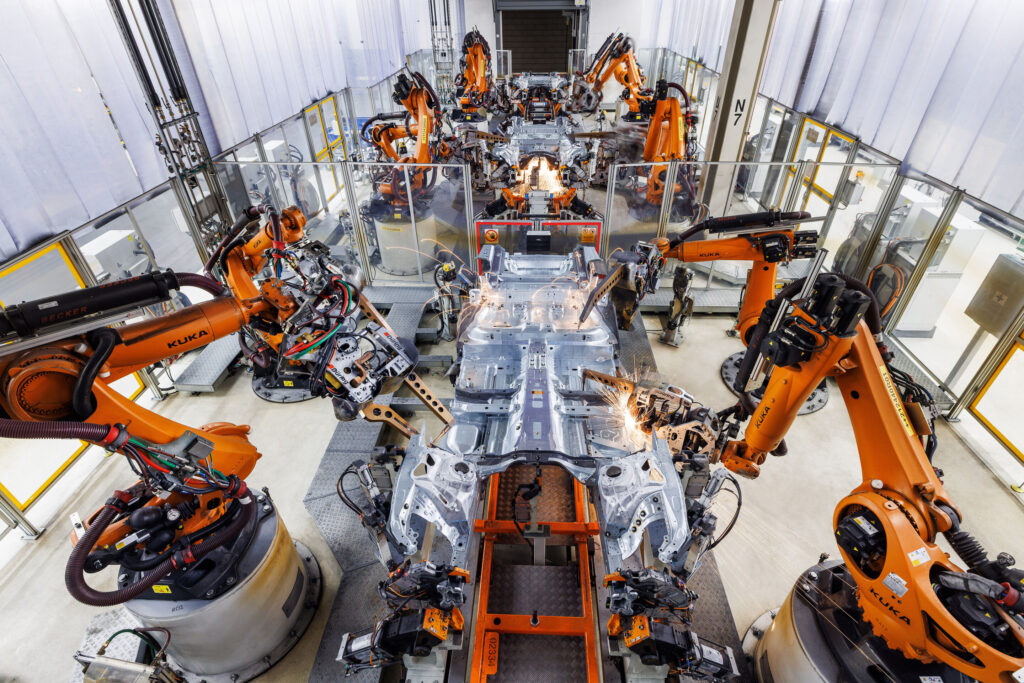
Many people interested in metal fabrication trends use robotic automation to streamline workflows and tighten quality control. Although some shops have fully automated welding cells, others prioritize collaborative robot arms that do specific steps alongside trained humans. Regardless of the particular methods chosen, decision-makers often increase efficiency with these approaches.
In one example, a manufacturer of specialist systems for recycling and waste-sorting plants installed a welding robot after prioritizing improved efficiency. Leaders proceeded to use the robots on all welded parts of a conveyor belt’s frame system. They reported that the cycle and throughput times for some products are one-third faster than they were before using this technology.
People in the facility also utilize an offline programming software product that allows them to simulate and optimize production processes before implementing them with the robotic welder or otherwise. They then save time while lowering error rates and rework.
6. Human-Technology Partnerships
Many metal fabrication trends blend human expertise and technological advancements. Even the most high-tech achievements require skilled people to develop them and ensure they function as intended in demanding environments. Professionals following welding innovations should expect to see continued collaboration between humans and technology.
Researchers exploring how to solve the persistent welding shortage in the United Kingdom concluded that human experts could train new robots to fill the gaps. They developed a robotic welding system that learns from skilled welders and creates an associated skills library. The compiled content enables the technology to perform new welding tasks without having to attempt them previously.
The researchers had proficient welders do basic tasks while an operation tracking system recorded their movements. Next, statistics about essential welding parameters, including the wire-feeding rate and welding angle, were extracted and stored in the skill library. The creators verified this system through experiments on stainless-steel workpieces, utilizing human expertise to train the robotic welder to perform complex and previously unseen tasks. The results indicated that the system achieves outcomes comparable to those of a skilled welder, allowing fabrication shops to save money and time.
Tracking Welding Innovations and Metal Fabrication Trends
Because metal fabrication progress affects so many industries, those involved recognize that these technological innovations can have a significant impact with successful efforts. Although these are some of the most prominent tech-driven improvements defining the current landscape, emerging ones will cause further disruption, pushing the boundaries of what shop workers and others believe possible.
Professionals can prepare themselves by remaining open-minded about new processes and products, even if adopting them means making substantial changes to their workflows. Those who embrace evolution frequently display the most resilience and keep themselves marketable in the industry compared to their change-resistant peers. Workers should also provide ongoing feedback to managers while implementing these innovations, recognizing that their input may influence future workplace technology investments.

