
In today’s industrial landscape, precision, efficiency, and reliability are no longer optional—they are essential. Industrial facilities across sectors such as oil and gas, chemical processing, manufacturing, and energy production rely heavily on controlled heating to maintain stable operations. Whether the goal is to keep liquids flowing through pipelines, accelerate chemical reactions, or maintain optimal processing temperatures, effective heating solutions are at the heart of modern industrial systems.
Among the many technologies available, industrial immersion heaters have emerged as one of the most efficient and adaptable heating solutions for industrial environments. Unlike traditional heating systems that rely on indirect heat transfer or combustion-based processes, immersion heaters deliver heat directly into the fluid or medium being heated. This simple yet powerful design allows industries to achieve faster heating, greater energy efficiency, and more precise temperature control.
As industrial operations become increasingly automated and energy-conscious, immersion heaters are playing a transformative role in how industries manage thermal processes. From improving production efficiency to supporting the global shift toward electrification, these heating systems are reshaping the future of industrial process heating.
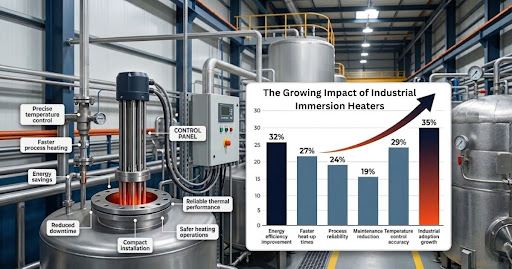
The Growing Impact of Industrial Immersion Heaters
Modern industrial facilities operate in an environment where efficiency, precision, and reliability are critical for maintaining competitive performance. Industries such as oil and gas, chemical processing, manufacturing, food production, and energy generation rely heavily on stable temperature control to ensure smooth operations and consistent product quality. As industrial processes become more complex and energy efficiency becomes a higher priority, companies are increasingly turning to advanced heating technologies that offer better control and performance.
Industrial immersion heaters are playing a major role in this transformation. Unlike traditional heating systems that rely on indirect heat transfer or combustion-based methods, immersion heaters generate heat directly within the medium being heated. This approach allows industries to achieve faster heating, greater energy efficiency, and improved temperature stability. By reducing heat loss and simplifying heating systems, immersion heaters are helping industrial facilities optimize production processes while lowering operational costs.
Below are several ways in which industrial immersion heaters are reshaping modern industrial heating systems and enabling more efficient operations.
Enhancing Energy Efficiency in Industrial Heating Operations
Energy efficiency is one of the most important factors influencing industrial equipment selection today. Industrial facilities often operate heating systems continuously, which means even small improvements in efficiency can significantly reduce overall energy consumption and operational costs.
Industrial immersion heaters provide a highly efficient heating method because the heating element is placed directly inside the liquid or gas that needs to be heated. This eliminates many of the heat losses associated with indirect heating systems, where energy must first heat an external surface before transferring to the medium. As a result, immersion heaters deliver faster heat transfer and improved thermal performance.
The energy efficiency benefits of immersion heaters include:
- Direct heat transfer for maximum energy utilization: Because the heating element is immersed directly in the medium, nearly all the generated heat is transferred to the substance being heated. This minimizes wasted energy and ensures that heating systems operate with greater efficiency compared to conventional heating methods.
- Reduced heating time for industrial processes: Direct heating allows liquids and process materials to reach the desired temperature more quickly. Faster heating cycles help improve production throughput and reduce energy consumption across the entire process.
- Lower operating costs for industrial facilities: Improved efficiency means less electricity or fuel is required to achieve the same heating performance. Over time, this reduction in energy usage can lead to significant cost savings for industrial plants.
- Improved thermal performance in demanding environments: In applications where large volumes of fluid must be heated continuously, immersion heaters provide consistent thermal output, ensuring stable performance even under heavy workloads.
These advantages make immersion heaters an attractive solution for industries seeking to optimize their energy usage while maintaining high production efficiency.
Delivering Precise Temperature Control for Critical Industrial Processes
Many industrial processes depend on maintaining very specific temperature ranges. Even small fluctuations in temperature can affect product quality, chemical reactions, and equipment performance. For industries such as pharmaceuticals, chemical manufacturing, and food processing, maintaining consistent temperature control is essential for both safety and product reliability.
Industrial immersion heaters are designed to integrate with advanced temperature control systems, enabling operators to monitor and regulate heating conditions with exceptional accuracy. Modern heating systems often incorporate digital sensors, automated controllers, and monitoring technologies that allow real-time temperature adjustments.
The precise temperature control provided by immersion heaters helps industries achieve several operational benefits:
- Stable production environments for sensitive manufacturing processes: Accurate temperature control ensures that chemical reactions occur under optimal conditions and that materials are processed consistently, leading to higher product quality.
- Improved product consistency and reduced process variability: Maintaining uniform heating conditions helps eliminate inconsistencies in manufacturing processes, which is particularly important in industries where strict quality standards must be met.
- Enhanced safety in temperature-sensitive applications: Automated temperature control systems help prevent overheating or thermal instability, reducing the risk of equipment damage or hazardous operating conditions.
- Greater flexibility for adjusting process parameters: Operators can quickly adjust temperature settings to accommodate changes in production requirements, making immersion heaters adaptable for a wide range of industrial processes.
With their ability to deliver accurate and stable heating, immersion heaters provide industries with the level of control required for modern precision manufacturing.
Improving Equipment Reliability and Minimizing Maintenance Requirements
Industrial facilities depend on equipment that can operate reliably for extended periods without frequent maintenance interruptions. Equipment failures in heating systems can lead to production delays, financial losses, and potential safety risks. For this reason, industries prioritize heating technologies that are both durable and easy to maintain.
Electric immersion heaters offer a significant advantage in this area because they have a relatively simple design with fewer moving components. Unlike combustion-based heating systems that require burners, fuel delivery systems, and exhaust management, immersion heaters rely primarily on electric heating elements.
This simplified design contributes to several reliability benefits:
- Reduced mechanical complexity in heating systems: Fewer components mean fewer potential points of failure, which helps improve overall system reliability.
- Lower maintenance requirements compared to combustion systems: Without fuel systems, burners, or exhaust mechanisms, immersion heaters require less frequent inspection and servicing.
- Long operational lifespan in demanding industrial environments: High-quality immersion heaters are designed using durable materials that can withstand high temperatures, corrosive fluids, and continuous operation.
- Improved system uptime and reduced production interruptions: Reliable heating systems allow industrial facilities to maintain consistent production schedules without unexpected downtime caused by heating equipment failures.
These reliability advantages make immersion heaters particularly valuable in industries where continuous operation is essential.
Supporting a Wide Range of Industrial Applications
One of the reasons immersion heaters have become so widely adopted is their versatility. These heating systems can be customized to meet the requirements of many different industrial processes. Whether the application involves heating water, oils, chemicals, or viscous fluids, immersion heaters can be designed to deliver the appropriate heating capacity and durability.
Industries that frequently rely on immersion heaters include oil and gas production, chemical manufacturing, food processing, water treatment, and power generation. In each of these industries, immersion heaters provide reliable heating solutions for tanks, pipelines, and process vessels.
Their versatility allows engineers to develop heating systems tailored to specific operational requirements, such as:
- Maintaining fluid temperature in pipelines and storage tanks: Immersion heaters help prevent liquids from becoming too viscous or freezing during storage and transportation.
- Supporting chemical reactions that require controlled heating conditions: Chemical processing plants use immersion heaters to maintain reaction temperatures and ensure consistent production outcomes.
- Heating process fluids in manufacturing environments: Many manufacturing processes rely on heated fluids to support cleaning, sterilization, and material processing operations.
- Preventing freezing in water treatment systems and outdoor storage facilities: Immersion heaters help maintain operational stability in colder climates where freezing temperatures can disrupt industrial systems.
Because immersion heaters can be adapted to so many different applications, they remain one of the most versatile heating technologies available for industrial environments.
Advancing Industrial Electrification and Sustainable Manufacturing
Industrial sectors around the world are actively pursuing strategies to reduce energy consumption and lower environmental impact. As part of these efforts, many companies are transitioning from fuel-based heating systems to electric heating technologies.
Electric immersion heaters support this transition by providing a cleaner heating solution that does not rely on fossil fuel combustion. Since these heaters operate using electricity, they produce no direct emissions at the point of use. When powered by renewable energy sources, electric heating systems can significantly reduce the environmental footprint of industrial operations.
Several factors are driving the adoption of electric immersion heating systems:
- Reduced greenhouse gas emissions compared to combustion heating: Electric heaters eliminate the emissions associated with burning fuel, supporting environmental sustainability initiatives.
- Improved compatibility with renewable energy systems: Electric heating systems can operate using electricity generated from solar, wind, or other renewable sources.
- Simplified infrastructure requirements: Electric heaters do not require fuel storage, exhaust systems, or combustion management equipment.
- Alignment with global industrial sustainability goals: Many industries are adopting electrified heating technologies as part of broader efforts to meet environmental regulations and reduce carbon emissions.
Manufacturers specializing in industrial heating solutions, including companies such as Wattco, continue to develop advanced electric heating systems that support modern industrial electrification efforts.
Integrating with Smart Industrial Monitoring and Automation
The rise of Industry 4.0 technologies has transformed how industrial facilities monitor and manage their equipment. Digital sensors, automation platforms, and predictive maintenance tools are now widely used to optimize production systems.
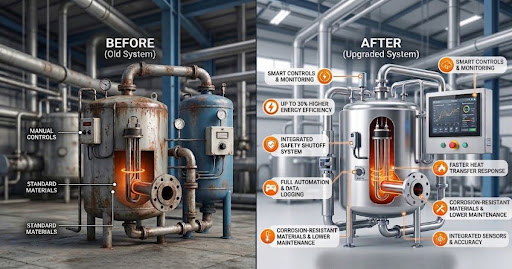
Industrial immersion heaters can be integrated with these smart technologies to improve operational efficiency. Modern heating systems often include digital monitoring features that allow plant operators to track heating performance in real time.
These advanced capabilities provide several operational advantages:
- Real-time monitoring of heating system performance: Operators can continuously monitor temperature levels and system performance to ensure stable operation.
- Predictive maintenance capabilities: Data collected from sensors can help identify potential maintenance issues before they lead to equipment failures.
- Improved process optimization through automated controls: Automated control systems can adjust heating levels based on real-time process requirements.
- Enhanced operational transparency across industrial facilities: Smart monitoring systems allow plant managers to gain better insight into heating performance and energy usage.
By integrating immersion heaters with modern industrial automation systems, companies can achieve greater control over their heating processes and improve overall operational efficiency.
Driving the Future of Industrial Process Heating
Industrial immersion heaters are rapidly becoming a cornerstone of modern industrial heating systems. Their ability to deliver efficient heat transfer, precise temperature control, and reliable performance makes them an essential component of many industrial processes.
As industries continue to adopt smarter technologies and pursue more sustainable manufacturing practices, immersion heaters will play an increasingly important role in improving operational efficiency and supporting cleaner industrial operations. By enabling faster heating, reduced energy consumption, and improved process control, these systems are helping transform how modern industries manage their thermal processes.
FAQs About Industrial Immersion Heaters in Modern Industry
What is an industrial immersion heater, and how does it work?
An industrial immersion heater is an electric heating device designed to heat liquids, gases, or viscous materials by placing the heating element directly into the medium. When electrical current passes through the resistive heating element, it generates heat that is immediately transferred to the surrounding fluid. Because the heating element is immersed directly in the material, heat transfer is faster and more efficient than indirect heating methods. This allows industries to maintain precise temperatures while reducing energy loss and improving overall process efficiency.
What industries commonly use industrial immersion heaters?
Industrial immersion heaters are widely used across many sectors that require reliable process heating. Their ability to deliver efficient and controlled heat makes them suitable for a broad range of industrial environments.
Some of the most common industries that use immersion heaters include:
- Oil and gas industry: Used to maintain crude oil temperature, prevent pipeline freezing, and support refining processes.
- Chemical processing: Helps maintain stable temperatures in reaction vessels and chemical storage systems.
- Food and beverage manufacturing: Used for heating oils, cooking processes, sterilization, and cleaning systems.
- Water and wastewater treatment: Prevents freezing and maintains optimal temperatures for treatment operations.
- Power generation: Supports heating systems used in turbines, boilers, and fluid circulation processes.
Their versatility allows immersion heaters to be adapted for various heating requirements across industrial sectors.
Which industries rely most on industrial immersion heaters?
Industrial immersion heaters are widely used in sectors that depend on reliable process heating and temperature control. Industries such as oil and gas, chemical processing, food manufacturing, water treatment, and power generation commonly rely on these systems to maintain optimal operating conditions. In oil and gas operations, immersion heaters help maintain fluid viscosity and prevent pipeline freezing. In chemical and manufacturing facilities, they support controlled reactions and production processes that require stable temperatures.
What are the main benefits of using industrial immersion heaters?
Industrial immersion heaters offer several advantages that make them a preferred heating solution for modern industries:
- Higher energy efficiency: Direct contact between the heating element and the medium reduces heat loss and improves heating performance.
- Precise temperature control: Integration with sensors and temperature controllers allows accurate and stable process heating.
- Low maintenance requirements: With fewer moving parts than combustion systems, immersion heaters require less frequent servicing.
- Versatile industrial applications: They can be customized to heat water, oils, chemicals, and other process fluids in various industrial environments.
These benefits help industries improve productivity while reducing operational costs and energy consumption.
Conclusion
Industrial immersion heaters are transforming the way industries manage process heating. Their ability to deliver direct heat transfer, precise temperature control, and reliable performance makes them an essential technology for modern industrial operations.
From oil and gas processing to chemical manufacturing and food production, immersion heaters support a wide range of industrial applications where efficient heating is crucial. As industries continue to prioritize efficiency, automation, and sustainability, electric heating technologies will play an increasingly important role in shaping the future of industrial systems.
By combining efficiency, adaptability, and advanced control capabilities, industrial immersion heaters are not only improving current industrial processes but also paving the way for more sustainable and intelligent manufacturing environments.

