
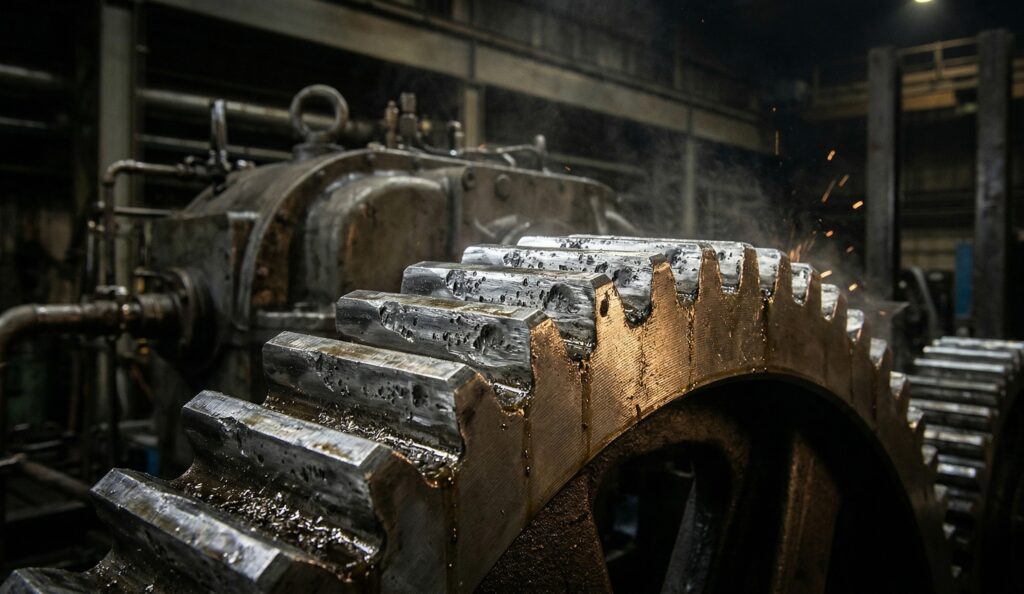
Why Wear Patterns Deserve Close Attention
Bull gears operate under significant loads and often in demanding environments. Over time, even well-designed gears begin to show signs of wear. These patterns are not random. They are indicators, almost like a diagnostic language, revealing how the gear has been performing and what stresses it has endured.
Understanding these wear patterns is essential for maintaining reliability, preventing unexpected failures, and improving future designs. In many cases, early identification of wear can reduce downtime and avoid costly repairs.
Surface Pitting: A Sign of Fatigue
Surface pitting is one of the most common wear patterns observed in bull gears. It appears as small craters or pits on the tooth surface.
This type of wear is typically caused by repeated contact stress. As gear teeth engage, localized pressure builds up. Over time, microscopic cracks form beneath the surface. These cracks eventually propagate, leading to material loss.
Contributing factors include:
- Excessive load beyond design limits
- Poor lubrication or contaminated lubricant
- Inadequate material hardness
While minor pitting may not immediately affect performance, progressive pitting can lead to noise, vibration, and reduced load capacity.
Scuffing: When Lubrication Breaks Down
Scuffing is a more severe form of wear that results from direct metal-to-metal contact. It often appears as streaks or smeared areas along the tooth surface.
This occurs when the lubricant film fails to separate the contacting surfaces. Without adequate lubrication, friction increases rapidly, generating heat and causing material transfer between gear teeth.
Common causes include:
- Insufficient or degraded lubricant
- High operating temperatures
- Sudden increases in load or speed
Scuffing can develop quickly and may lead to significant damage if not addressed promptly.
Abrasive Wear: The Impact of Contaminants
Abrasive wear is characterized by scratches or grooves on the gear surface. It is typically caused by hard particles present in the lubricant.
These particles act like fine cutting tools, gradually removing material from the gear teeth. Sources of contamination may include dirt, metal debris, or improper filtration.
Factors that contribute to abrasive wear include:
- Poor sealing of the gear system
- Inadequate filtration
- Contaminated or degraded lubricant
Over time, abrasive wear can alter tooth geometry, affecting gear alignment and efficiency.
Adhesive Wear: Material Transfer Between Surfaces
Adhesive wear occurs when surfaces in contact experience localized bonding due to high pressure and temperature. When these bonds break, material is transferred from one surface to another.
This type of wear often accompanies scuffing but can also occur independently under certain conditions.
It is commonly associated with:
- High load conditions
- Insufficient lubrication
- Rough surface finishes
Adhesive wear can lead to uneven surfaces, increased friction, and accelerated degradation.
Tooth Breakage and Bending Fatigue
Not all wear patterns are gradual. In some cases, gear teeth may crack or break entirely.
Bending fatigue is a primary cause of such failures. Repeated loading cycles create stress at the base of the tooth. Over time, this stress leads to crack initiation and propagation.
Key contributing factors include:
- Overloading beyond design capacity
- Misalignment causing uneven load distribution
- Material defects or improper heat treatment
Tooth breakage is often a critical failure mode that requires immediate attention and replacement of the affected gear.
Corrosive Wear: Environmental Influence
In certain environments, chemical reactions can contribute to gear wear. Corrosive wear occurs when moisture, chemicals, or reactive substances interact with the gear material.
This type of wear may appear as discoloration, surface degradation, or pitting that differs from fatigue-related patterns.
Common causes include:
- Exposure to moisture or humidity
- Chemical contaminants in the lubricant
- Inadequate protective coatings
Corrosive wear can weaken the material and make it more susceptible to other forms of damage.
Misalignment and Uneven Contact Patterns
Wear patterns can also reveal alignment issues within the gear system.
When gears are not properly aligned, contact between teeth becomes uneven. This leads to localized wear, often concentrated on one side of the tooth.
Signs of misalignment include:
- Uneven wear across the tooth face
- Increased noise and vibration
- Accelerated wear in specific مناطق
Addressing alignment issues is critical to restoring proper load distribution and preventing further damage.
The Role of Maintenance and Monitoring
Regular inspection and maintenance play a key role in managing gear wear. When early signs of damage are identified, planning for bull gear repair can help extend service life and reduce the risk of unexpected failure.
By monitoring wear patterns, operators can identify potential issues before they escalate. Techniques such as visual inspection, vibration analysis, and oil analysis provide valuable insights into gear condition.
Preventive measures include:
- Maintaining proper lubrication levels and quality
- Ensuring effective filtration systems
- Conducting periodic alignment checks
Consistent maintenance not only extends gear life but also improves overall system reliability.
Conclusion
Wear patterns in bull gears provide valuable information about operating conditions, material performance, and system health. Each type of wear, whether it is pitting, scuffing, or abrasive damage, points to specific underlying causes.
By understanding these patterns, engineers and maintenance teams can take targeted actions to address issues, optimize performance, and prevent failures.
In complex mechanical systems, wear is inevitable. However, with careful analysis and proactive management, its impact can be effectively controlled.

