
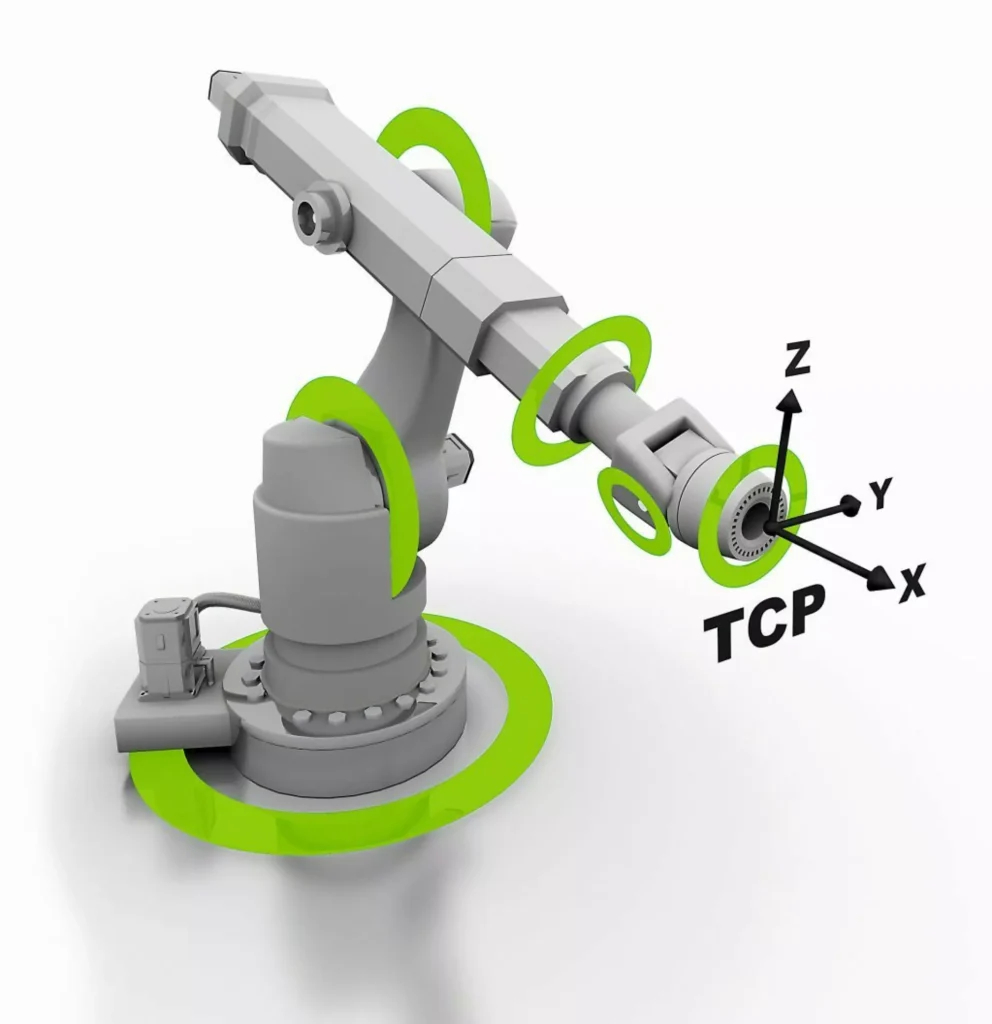
A 5-axis machine can look incredibly capable on paper and still deliver inconsistent parts on the shop floor. That gap usually appears when shops rely on machine motion alone and assume complex tool movements will stay accurate without tighter control of the tool tip itself.
That is where tool center point control changes the conversation. TCPC helps the machine keep the cutting point aligned with the programmed path even as the rotary axes move, reducing positional error, protecting surface quality, and making demanding parts far more repeatable.
Where Tool Tip Accuracy Matters Most
- Why Rotary Motion Changes Everything
In 3-axis work, accuracy problems often come down to familiar issues such as tool wear, fixture movement, thermal growth, or poor offsets. In 5-axis milling, those factors still matter, but rotary motion adds another layer of risk. Once the table or head begins to tilt and rotate, the exact position of the tool tip becomes harder to maintain unless the control system continuously accounts for those changing angles. Without that compensation, small alignment errors can become visible on the part as taper, mismatch, poor blend lines, or dimensional drift.
- Why Tool Path Control Gets Harder
The challenge is not simply getting the spindle to move in more directions. It is keeping the cutting point exactly where the program expects it to be while the machine changes orientation in real time. That is why shops working on contoured surfaces, deep cavities, impellers, molds, or complex aerospace and medical parts increasingly depend on 5-axis milling strategies that include strong compensation logic at the control level, not just good CAM output. When the machine can maintain the tool center point through coordinated motion, the process becomes far less vulnerable to cumulative error.
- TCPC Keeps The Cut Consistent
Tool center point control tells the machine to focus on the actual location of the cutting point rather than only the nominal positions of individual axes. As rotary axes move, the control recalculates how linear axes must respond so the tool tip remains on the intended geometry. That sounds technical, but the practical result is easy to understand: the machine keeps the cut where it belongs even while the tool angle changes.
This matters because 5-axis motion is never just a collection of separate moves. Linear and rotary axes influence one another. A slight change in tilt angle can alter the effective position of the tool tip relative to the part if the control does not compensate correctly. TCPC closes that gap. Instead of forcing programmers and operators to manage every rotary relationship manually, it lets the control handle the math dynamically, reducing setup sensitivity and improving confidence in the finished part.
- Less Dependence On Perfect Setup
One of the clearest advantages of TCPC is that it reduces the burden placed on part setup. In conventional multi-axis workflows, even a modest variation in fixture location or work offset can cause noticeable deviation once rotary motion begins. Operators may then spend valuable time touching off, rechecking centerlines, or adjusting offsets to avoid scrap. TCPC does not eliminate the need for careful setup, but it gives the machine more ability to maintain geometric accuracy despite minor variation in how the workpiece is positioned.
That makes the process more resilient. Shops running high-mix work, prototype runs, or shorter production batches benefit because they cannot afford long setup cycles every time a new part is loaded. When the control can preserve the relationship between the tool tip and part geometry more intelligently, the setup becomes less fragile. The machine spends more time cutting and less time waiting for manual correction.
- Smoother Surfaces And Tighter Blends
Accuracy in 5-axis milling is not only about holding a final dimension on a print. It also shows up in surface finish, blend quality, and the way complex curves transition from one region to another. Poor coordination between axes can create witness marks, faceting, or inconsistent scallop patterns, especially on sculpted surfaces. Those flaws may force extra polishing, hand blending, or even remachining if the part cannot meet finish requirements.
TCPC helps protect against that outcome by stabilizing the tool’s engagement with the material across changing orientations. When the control maintains the correct tool center point, the cutter follows the intended surface more faithfully. That leads to smoother finishes and cleaner geometric continuity. For manufacturers producing visible or high-performance surfaces, that is not a cosmetic benefit alone. It affects downstream labor, inspection outcomes, and customer confidence in the process.
- Better Results Across Tool Length Changes
Another practical reason TCPC improves accuracy is its relationship with tool length compensation. In complex milling environments, shops often use different tool assemblies to reach deep features or avoid collisions. Longer tools introduce more risk because any compensation error becomes more pronounced as the reach increases. Without strong control logic, switching tools can shift the effective cutting position, requiring additional recalculation or manual adjustment.
TCPC helps normalize that process. Because the control tracks the true cutting point rather than relying solely on static axis assumptions, it can adapt more effectively when tool length data changes. This improves repeatability between setups and across tool replacements. In day-to-day production, that means fewer surprises after a tool change and less time spent repeatedly proving out the same motion. Accuracy becomes more durable rather than dependent on a narrow, ideal setup condition.
The Difference Between Motion And Control
A 5-axis machine earns its value when it can translate complex motion into dependable geometry. Tool center point control helps make that possible by keeping the tool tip aligned with the programmed path as the rotary axes move, thereby improving dimensional accuracy, surface quality, and repeatability. It also reduces setup sensitivity, supports better tool compensation, and lowers the risk of scrap on demanding parts.
The larger lesson is simple: more machine motion does not automatically create more precision. Control over that motion does. TCPC gives 5-axis milling a more stable and practical path to accuracy, which is exactly why it has become such an important part of serious multi-axis machining.

