
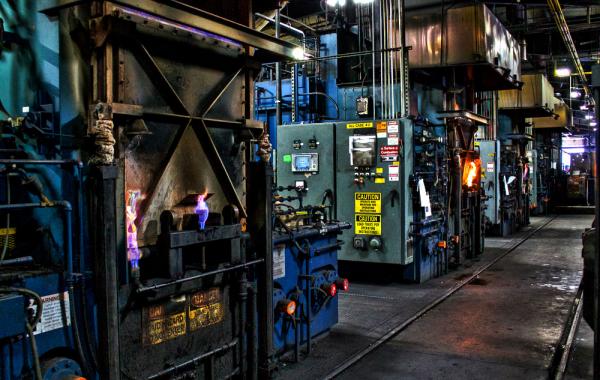
It is easy to overlook how sensitive thermal processes are to even minor deviations. To illustrate, consider the difference between baking bread with and without a reliable oven thermometer. Despite following every step, an incorrect temperature can result in failure. Now apply that same principle to heat treatment in aerospace, automotive, or medical components. The implications of a few degrees of inaccuracy extend far beyond aesthetics or minor quality loss. In industrial metallurgy, they can mean catastrophic failure.
Temperature precision in heat treatment is not a luxury. It is a core requirement for achieving consistent, reliable results.
Understanding the Heat Treatment Process
Heat treatment is not simply the act of heating and cooling metals. It is a deliberate, controlled process designed to manipulate the internal structure of materials. Techniques such as hardening, annealing, tempering, and normalizing all rely on precise thermal inputs to modify properties like hardness, ductility, tensile strength, and toughness.
At the core of this process are phase transformations and microstructural changes, including grain refinement and dissolution of carbides. These transformations occur within defined thermal thresholds and require carefully controlled time-temperature combinations. Small deviations, even by a few degrees Celsius, can cause incomplete or incorrect changes at the atomic level, compromising the mechanical integrity of the component.
Precision Is Not Optional
In industrial applications, thermal margins are often narrow. For example, tool steels typically require austenitizing within a range of ±5 °C. Exceeding that range can lead to excessive grain growth, retained austenite, or uneven hardness. Conversely, underheating may result in insufficient phase transformation, reducing the material’s performance under load.
Industries such as aerospace and medical device manufacturing demand especially tight thermal control. In these contexts, temperature variation is not just a quality issue. It can become a safety issue. Incorrect tempering, insufficient soak times, or poor quenching control can lead to component fatigue, stress cracking, or early failure in the field. These consequences are both technically and financially costly.
Tools and Systems That Support Precision
Maintaining tight thermal control requires advanced instrumentation and careful calibration. Modern heat treatment systems often incorporate closed-loop feedback control using thermocouples and industrial-grade temperature controllers. Brands such as Honeywell, Watlow, and Eurotherm provide programmable logic controllers (PLCs) and digital monitoring systems capable of adjusting inputs in real time.
Multiple thermocouples are typically embedded at strategic points within the furnace chamber. These sensors feed continuous temperature data to the control unit, which adjusts heating elements accordingly. In batch processes, uniformity throughout the load is just as critical as peak temperature. In continuous systems, maintaining zone stability and ramp rates is essential.
Equally important is regular calibration. Sensors can drift over time, and even small inaccuracies can accumulate across cycles. Routine verification, calibration to traceable standards, and preventive maintenance are necessary to preserve thermal integrity.
Risks of Inadequate Control
Despite best efforts, failures in temperature control do occur. These failures can have serious downstream consequences, including:
- Warping and distortion: Caused by uneven heating or cooling rates
- Cracking: From thermal shock or improper soak profiles
- Inconsistent hardness: Resulting from incorrect austenitizing or quenching parameters
- Surface decarburization: Due to improper atmosphere control in high-temperature environments
In critical manufacturing environments, the failure of a single batch due to thermal inconsistency can result in significant financial loss, production downtime, and damage to reputation. Product recalls and liability issues further amplify the cost of thermal mismanagement. In some cases, entire production runs have been scrapped or requalified due to missed setpoints by only a few degrees.
The Value of Accurate Thermal Processing
Organizations that invest in precise temperature control systems consistently achieve better outcomes. Benefits include:
- Improved consistency across batches and shifts
- Reduced rework and scrap rates
- Enhanced mechanical performance and reliability of treated parts
- Greater process transparency and traceability
- Easier compliance with industry standards such as AMS2750 or CQI-9
In highly regulated industries, traceable and verifiable thermal profiles are not only expected but required. They form the backbone of quality assurance systems and are integral to demonstrating conformance to engineering specifications.
For companies seeking reliability, performance, and compliance, partnering with experienced providers of heat treating services can make a measurable difference. These specialists bring the equipment, expertise, and process discipline necessary to maintain temperature control at a consistently high standard.
Conclusion: It Is Not Just About Heat
The term “heat treatment” can be misleading. It suggests that heat is the only factor of interest. In reality, the key variable is not simply the presence of heat, but the precise control of it over time. Temperature is both the driver and the limiter of material transformation. Control is what ensures that the heat delivers the intended results.
For engineers and manufacturers, this distinction is crucial. It is not sufficient to reach a setpoint and hold it. The process must be documented, repeatable, and resilient to disturbance. Precision in temperature control provides the foundation for safe, high-performance products. Without it, even the most sophisticated designs and materials are at risk of underperforming or failing outright.
In short, heat treatment success hinges not only on heat itself, but on the precision with which that heat is applied.

