

In industrial electrical engineering, power resistors are often treated as an afterthought: simple, passive components tasked with bleeding off excess current as heat. But treating a megawatt-class braking resistor with the same logic as a printed circuit board component is a fast track to thermal runaway, tripped drives, and catastrophic facility downtime.
Industrial power resistors do not operate in a temperature-controlled vacuum. They are tasked with absorbing massive, violent surges of kinetic and electrical energy in environments plagued by heavy vibration, corrosive dust, and extreme ambient heat.
When a 50-ton overhead crane rapidly decelerates, or a utility-scale backup generator undergoes a critical load test, the resistor acts as the ultimate safety valve for the entire electrical system.
For electrical engineers, procurement teams, and EPC (Engineering, Procurement, and Construction) contractors, successful specification requires moving beyond baseline wattage and ohmic values. It demands a systems-level approach to thermal dynamics, environmental enclosures, and mechanical resilience.
This guide breaks down the critical parameters for sizing and specifying power resistors that actually survive the brutal realities of high-duty industrial applications.
Core Industrial Applications and Resistor Types
The first step in specifying a power resistor is matching the physical construction of the component to the exact nature of the load it will handle. Resistors come in many constructions, and their physical makeup directly dictates their power capacity, inductance, and ideal use case.
Wirewound Resistors for Heavy Power
For applications requiring massive power dissipation, ranging from a few watts up to megawatts in large assemblies, wirewound resistors are the industry standard. Constructed from resistive wire (such as nickel-chrome or CuNi) wound on a ceramic core, these components are incredibly rugged. They handle the highest power loads and offer tight tolerances (often 1% or better) with low electrical noise. Wirewounds can be open-coil, cement-potted, or housed in aluminum.
Because of their immense capacity, they are the go-to construction for high-power dynamic braking in EVs and rail systems, as well as for industrial load banks, power dumps, and snubbers. However, it is important to note that their coiled wire yields significant inductance, making standard wirewounds unsuitable for high-frequency circuits unless specific non-inductive styles are specified.
Cement and Ceramic Composition Resistors
When an application demands extreme reliability under stress, cement (or ceramic composition) resistors are utilized. Often referred to as “flameproof” resistors, these are essentially wirewound elements sealed entirely in cement or ceramic. This casing provides exceptional moisture resistance, flameproof protection, and excellent pulse handling capabilities, making them ideal for high-stress environments where absorbing sudden energy spikes is critical.
Metal-Film and Metal-Oxide for Precision and AC
When low inductance and minimal noise are required (such as in complex power supplies or sensing networks), engineers turn to metal-film and metal-oxide film resistors. These are created by applying thin or thick coatings of metal alloy onto ceramic substrates.
- Thick-film power resistors (often cement-encased) can dissipate a few watts to tens of watts.
- Thin-film parts are usually utilized for sub-watt applications but offer incredible precision, with tolerances down to 0.1%.
- Metal-oxide films (like tin-oxide) are highly stable, tolerate higher voltages and temperatures than traditional carbon resistors, and produce less excess noise. Their low inductance makes them excellent for AC industrial applications.
Current-Sense and Shunt Resistors
For precise current measurement within battery management systems or power supplies, current-sense or shunt resistors are required. Constructed from very low-value metal strips or foil, these specialized resistors feature incredibly low inductance and often utilize Kelvin (4-wire) terminals for exact readings. Depending on the scale of the application, they can be sized to handle just a few watts on a PCB or scaled up to hundreds of watts for heavy in-line industrial shunts.
Electrical Specification Fundamentals

Before thermal mass can be calculated, engineers must define the absolute electrical stress limits of the application. The foundational calculation for continuous power relies on Ohm’s Law ($P = I^2R = V^2/R$), but specifying industrial components requires separating steady-state limits from absolute voltage ceilings and dynamic energy absorption.
Voltage Ratings and Electrical Stress Limits
A common specification error is assuming a resistor can safely handle any voltage as long as its continuous power rating is not exceeded. In reality, industrial datasheets treat voltage limits as three distinct constraints:
- Maximum Working Voltage: The continuous operating limit (often DC or AC RMS).
- Maximum Overload Voltage: The strict ceiling for short-duration overvoltage events.
- Dielectric Withstanding Voltage (Voltage Proof): A test voltage applied for a specified time to verify the integrity of the component’s external insulation.
At high resistance values, voltage constraints frequently become the limiting factor rather than the power rating. While maximum permissible voltages are often tens to hundreds of volts for standard SMD or through-hole parts, specialized high-voltage metal-oxide families can be designed for kilovolt-class working voltages (e.g., up to 8 kV).
Energy Absorption Capacity in Dynamic Loads
In systems utilizing dynamic braking for variable frequency drives (VFDs), resistors are subjected to massive, short-duration energy spikes. In these scenarios, engineers must evaluate the component’s thermal time constant (or transient thermal impedance).
The continuous wattage rating is less critical than the single-pulse energy absorption capacity, measured in Joules ($E = \int I^2R \, dt$). Engineers must utilize transient thermal curves and pulse charts to compute the energy per pulse and the cumulative temperature rise over a pulse train. Military-qualified wirewounds and industrial braking resistors routinely publish short-time overload conditions allowing 5 to 10 times their rated continuous power for short durations (typically ~5 seconds) before crossing their thermal threshold.
Sizing Fundamentals and Thermal Derating
A resistor handling a continuous load requires a vastly different thermal profile than one absorbing dynamic spikes. The duty cycle (the ratio of the resistor’s “on” time to its total cycle time) dictates the required thermal mass. A dynamic braking resistor on a hoist may only see a load for ten seconds every two minutes, allowing it to be sized with a lower continuous wattage rating, provided its physical mass can absorb the peak pulse energy.
When specifying these parameters, theoretical math must align with strict regulatory compliance. For instance, an ISO 9001:2015 certification indicates a manufacturer’s quality management system maturity, but the components themselves must be assessed against specific safety standards.
When sourcing neutral grounding resistors (NGRs) to safely limit fault currents, the unit must be engineered to specific parameters—such as fault current, time rating (e.g., 10 s or 1 min), temperature rise class, and element type—in strict accordance with IEEE Std C57.32-2015 (Clause 7) and its amendment IEEE C57.32a-2020. Manufacturers specializing in power quality, such as MegaResistors, build explicitly to these defined standard limits.
Similarly, a dynamic braking resistor assembly must adhere to UL 508 and CSA C22.2 No. 14 if assessed as a standalone industrial control accessory, or UL 61800-5-1 if integrated directly into an adjustable speed drive system.
Furthermore, altitude significantly impacts both convective cooling efficiency and insulation coordination (dielectric air breakdown). A resistor installed at a high-altitude mining facility will require significant derating for both power and voltage clearances compared to the same unit installed at sea level.
Thermal Management and Cooling Strategies

All power dissipated by a resistor converts directly to heat. The core metric in thermal management is thermal resistance ($\theta$), representing the temperature rise in degrees Celsius per watt of dissipated power (°C/W).
Surface Temperature Limits and Mounting Flatness
Industrial braking and load resistors run hot enough to create severe fire hazards. Manufacturer datasheets routinely cite housing temperatures reaching 250°C at nominal power (at Ta ~40°C). Consequently, free-standing power ratings are heavily dependent on allowable touch temperatures, guarding, and strict spacing requirements from combustible materials.
To safely lower thermal resistance, larger wirewounds are designed to be bolted to massive aluminum panels. However, a heatsink-rated power specification is entirely conditional on proper installation. Manufacturers mandate specific surface flatness/roughness tolerances, the application of thermal compound, and precise mounting torques (measured in N·m). Without this secure thermal interface, the component must be heavily derated back to its free-air power rating.
Enclosure Considerations and Environmental Protection
The physical housing of the power resistor is just as critical as the active electrical elements inside. Power resistors in industrial use must survive harsh conditions. In demanding sectors such as marine, aerospace, oil and gas, and outdoor power substations, resistors frequently receive silicone or epoxy coatings, utilize stress-relieved leads, or are mounted inside sealed enclosures.
Standard resistors themselves are not inherently IP-rated, but they are often coated or mounted in IP-coded assemblies to block dust and fluids. For example, industrial wirewound resistors can be supplied in IP20 to IP23 enclosures accommodating power ratings from 300 W up to 100 kW. For outdoor or highly corrosive applications, epoxy-encased or silicone-coated resistors (like vitreous enamel on wirewindings) are common, which also helps components meet stringent flammability or “flameproof” ratings.
Mechanical Shock and Vibration
Beyond weather and moisture, industrial enclosures and mounts must withstand severe kinetic forces. Axial-leaded or bolt-mounted resistors can experience intense mechanical stress; loose or excessively long leads subjected to 10+g vibration can easily fracture terminations. To secure these components, designers often use anchoring, clamps, or heavy threaded studs.
Datasheets frequently specify thread torque (often requiring 5 to 10 lb of pull strength), and engineers should utilize locknuts or star washers to avoid hardware loosening under constant vibration. When evaluating durability, engineers should verify MIL-STD-202 or IEC 60068 vibration ratings; for instance, MIL-PRF-39007 RWR parts exhibit less than 0.1% drift under 100g shock when properly mounted.
Creepage, Clearance, and Thermal Expansion
Engineers must also account for spatial and thermal constraints within the enclosure. In high-voltage circuits, ensuring adequate spacing is mandatory. Following IEC 60664-1 for creepage, basic electrical safety rules dictate approximately 3 mm per kV for solid insulation spacing.
Furthermore, because mounted resistors undergo extreme thermal cycling, differing coefficients of expansion can quickly fatigue solder joints. A high-mass element, such as a wirewound bobbin, expands at a different rate than standard PCB glass epoxy. To relieve this mechanical stress in assemblies where temperature swings are frequent, specific power resistors incorporate flex-lug terminals or silicone beads.
Reliability and Common Failure Modes

When industrial power resistors fail, the most frequent result is an open circuit (or infinite resistance) caused by element burnout or severe corrosion. However, reliability data reveals a surprising reality: more than 90 percent of component failures stem from printed circuit board (PCB) or solder joint issues, rather than a failure of the resistive element itself. Understanding these specific failure modes is critical for proactive system design.
Power Overload and Thermal Runaway
Exceeding the specified wattage rating of a resistor inevitably leads to overheating. This overload manifests visually as blackened, charred, or cracked component bodies before the internal element finally melts or burns open. While flameproof cement resistors tend to survive these overload conditions longer than standard components, their resistance values will still drift upwards under extreme thermal stress. Additionally, although rare in modern precision designs, thermal runaway can occur if specific types (such as older carbon composition resistors with negative temperature coefficients) are utilized improperly.
Moisture, Sulfur, and Corrosion
Environmental contamination is a massive threat to component longevity, particularly for PCB-mounted electronics. Thin-film chip resistors exposed to high humidity can “grow” conductive dendrites that eventually bridge connections and create short circuits. Furthermore, reliability labs such as SEMLab report that thick-film chip resistors frequently fail when sulfur in the ambient air corrodes their internal silver conductors. This sulfur corrosion causes the resistance to steadily rise until the circuit eventually opens completely. While massive bulk power resistors are physically more robust, any exposed metal on their terminations or leads will corrode if not properly protected with conformal coatings or gold-plated finishes.
Solder-Cracking and Mechanical Fatigue
The physical mass of heavy power components makes them highly susceptible to mechanical fatigue. Wirewound resistors or large chip resistors mounted on PCBs are highly prone to cracking their solder joints under the constant stress of heavy vibration or severe thermal cycling. Consequently, engineers must specify proper mounting hardware and rigorously inspect solder fillets during assembly. Furthermore, improper cleaning processes that leave behind halogen flux residue can lead to electromigration and subsequent component failure over time.
Aging and Resistance Drift
Even when operated under normal loads and stable conditions, resistors will slowly change their resistance value over time, a phenomenon known as “creep”. High-stability components are specifically engineered to limit this drift; for instance, military-grade wirewounds guarantee a drift of less than 0.05 percent over 1000 hours of operation.
In stark contrast, budget components such as cheap silicone-coated or basic carbon-film resistors can drift anywhere from 1 to 5 percent over their operational lifespan. To prevent system degradation, engineers must design circuits with adequate safety margins (by selecting tighter initial tolerances or higher power ratings) and mandate strict drift testing during the qualification phase for critical applications.
Engineering Documentation and Spec Verification
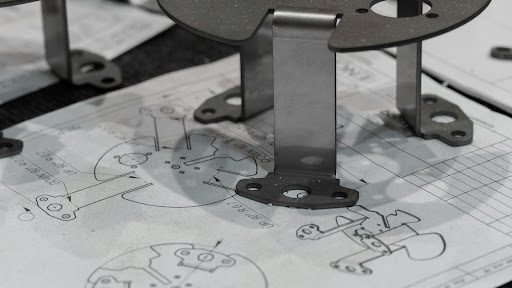
Industrial power resistors are rarely off-the-shelf components dropped casually into a design. High-capacity braking resistors, grounding resistors, and load bank assemblies are often custom-engineered configurations, which means the verification process extends far beyond reading a datasheet. Before procurement approval, engineering teams must review a complete set of technical documentation to confirm that the resistor will perform safely within the intended electrical and environmental conditions.
A proper verification package typically includes detailed enclosure drawings, internal wiring layouts, thermal test reports, certification documentation, and installation schematics. These materials allow engineers and EPC contractors to confirm key design factors such as airflow paths, terminal spacing, insulation clearances, and mounting configurations. In high-power systems, even small installation differences can significantly affect thermal behavior or maintenance accessibility.
To prevent miscommunication during the approval process, modern engineering teams increasingly centralize this documentation alongside their core design assets. Just as they rely on tools like AutoCAD for drafting or Vault for product data management, teams are moving heavy visual assets, such as high-resolution enclosure photography, thermal imaging results, and visual inspection records, into centralized image management platforms like PicDrop. Instead of battling restrictive email attachment limits or relying on loosely organized folders, project stakeholders can review these structured, easily shareable visual galleries to maintain version control and traceability throughout procurement and installation.
This disciplined approach to documentation ensures that every stakeholder, from the specifying engineer to the commissioning technician, works from the same verified technical reference. When documentation is clear, traceable, and reviewed collaboratively, teams can confidently approve resistor assemblies knowing that the physical implementation will match the electrical design assumptions.
Interactive Technical Documentation for Complex Hardware
Understanding the physical configuration of a high-power resistor assembly is not always straightforward from static documentation alone. Traditional specification packages rely heavily on datasheets, wiring diagrams, and enclosure drawings. While these documents contain critical technical information, they can sometimes make it difficult for engineers and procurement teams to visualize how the full assembly will function once installed in the field.
This challenge becomes more pronounced when evaluating complex equipment such as dynamic braking resistor banks, custom neutral grounding systems, or large load bank assemblies. Engineers often need to understand the relationship between enclosure layout, airflow channels, terminal positioning, and mounting structures. Without a clear visual walkthrough, interpreting these relationships from flat schematics can slow down the specification and approval process.
To improve clarity, some manufacturers now supplement traditional documentation with interactive technical walkthroughs that allow engineers to explore product configurations step by step. AI-powered platforms such as Supademo make it possible to build guided visual walkthroughs of product features, enclosure layouts, and installation steps without requiring custom software development.
These interactive guides allow procurement teams and field engineers to examine equipment more intuitively. Instead of relying solely on static diagrams, stakeholders can review mounting configurations, terminal layouts, and enclosure features in a structured visual sequence. This format can help answer practical questions earlier in the evaluation process, reducing delays during specification reviews.
While traditional engineering documentation remains the foundation of product evaluation, interactive technical guides can serve as a useful supplementary tool. When used alongside formal datasheets and certification records, they help bridge the gap between theoretical specifications and real-world equipment understanding.
Conclusion
The true cost of an industrial power resistor is never found on its purchase order; it is measured in the continuous uptime of the critical infrastructure it protects. When procurement and engineering teams move beyond theoretical datasheet values and design for the harsh, physical realities of the factory floor, they transform a basic passive component into a bulletproof safeguard.
Ultimately, successful specification is an exercise in bridging the gap between ideal mathematics and brutal operating environments. By prioritizing rigorous environmental compliance, physical durability, and streamlined technical collaboration, teams can ensure their electrical systems do not just function flawlessly on paper, but “just work” under the most extreme real-world conditions.

