
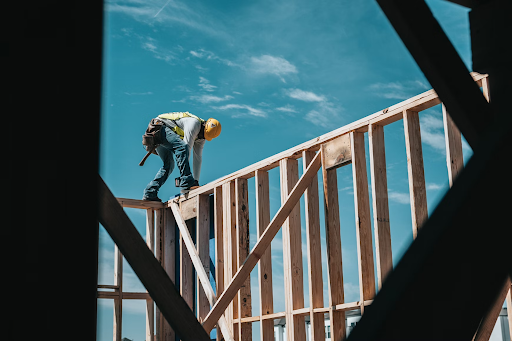
Material selection is central to any building project.
Materials drive performance. They establish aesthetics. They play a key role in ongoing maintenance requirements.
While there are many materials that perform admirably in both commercial and residential construction projects, there are some that are definitely more “at-home” in their own specific niche. Keep reading as we explore various building considerations and discuss which materials work best in commercial vs. residential domains!
Durability
Durability is a primary concern for both commercial and residential structures. Who doesn’t love a building that is long-lasting and easy to maintain?
With that said, durability is arguably the top concern for commercial properties. These buildings will usually have a much longer lifespan than residential structures. They will see heavy wear and tear from foot traffic and machinery. They are commonly multi-story, making load-bearing capacity of utmost concern. For these reasons, steel frames, reinforced concrete foundations, and epoxy terrazzo flooring are some of the most widely-used materials in commercial applications.
In residential properties, durability is still important. However, it may take a bit of a back seat to aesthetics and ease-of-installation. Balancing these concerns with more limited consumer budgets is also worth noting. This makes synthetic/composite products, such as vinyl siding, LVT flooring, engineered quartz countertops, and oriented-strand board framing more popular in residential homes.
Acoustics

A tranquil interior is crucial for both commercial and residential properties. However, the motivation behind acoustic performance may be distinct between the building types.
Performance and productivity are the name of the game in commercial buildings. Facilities such as hospitals and universities located in bustling urban centers must be able to mitigate noise from traffic, construction, and ambient city noise. This will see the use of features such as:
- Double- or triple-paned windows
- Ceiling clouds
- Acoustic wall panels
- Specialized window systems to comply with STC requirements
- Dampers and sound attenuators in busy utility rooms
Although it is no secret that at-home professionals are on the rise, the primary goal of residential acoustics remains comfort and privacy. Blocking out noisy neighbors. Stifling barking dogs. Mitigating howling winds. All of this can help homeowners get a more restful night sleep and enjoy their premises to the fullest.
Sealing door and window frames are some of the best noise-reducing features for homeowners. Lately, advances in window soundproofing have seen a rise in easy-to-use window seal kits for an additional layer of acoustic insulation.
Ventilation
The importance of adequate ventilation came under the microscope during the COVID-19 pandemic. It remains a central consideration in all property types today.
In commercial settings, the use of architectural louvres is the best means of promoting passive air flow into the structure. Commonly fabricated from a series of breeze-activated aluminum blades, louvres allow air to flow through a structure while blocking precipitation and debris. They are often found near utility rooms, parking garages, or any other area where mass ventilation is necessary. This promotes respiratory health of building occupants. It also mitigates the effects of direct sunlight and helps keep A/C usage to a minimum.
The use of louvres in residential properties is less widespread. If they exist, it’s likely only as a tool for attic ventilation or as decorative shutters. Ventilation in residential properties is most commonly secured by regularly changing HVAC filters and installing easy-to-open windows. The rise in functional exterior space also plays a key role in promoting air quality in residential properties.
Performance Roofing

Roofs are the first line of defense against the elements, helping insulate the building and prevent insidious leaks. They also boost aesthetics for stunning curb appeal.
Increasingly, roofs are being leveraged for their functional benefits. In commercial buildings, the roof may serve as a terrace. It could be used as a temporary storage/loading space. It may be an access point for emergency personnel.
One of the best materials for facilitating these diverse ends is rubber roof pavers. They are slip-resistant and offer premier drainage. They are highly durable, serving as a top-notch surface material for machinery and foot traffic while protecting the roof substrate. And their composite fabrication of recycled tires and plastics makes them one of the most sustainable options on the market.
These types of composite pavers are also a great option for residential properties. They work equally well on decks as they do for flat-roof patios. They are easy to install for both professionals and DIYers. Sound resistant and aesthetically-pleasing, they are low-maintenance for ongoing performance.
Commercial vs. Residential Construction: Know Which Materials Fit the Bill
When it comes to material selection for an upcoming construction project, understand that there are some options well-suited for commercial applications, while others are better for residential properties. When assessed along factors such as durability, acoustics, ventilation, and roofing performance, consider any of the innovative materials listed above when deciding on commercial vs. residential needs. For more of the latest trends in commercial construction, explore the content at Linquip for additional thought leadership!

