
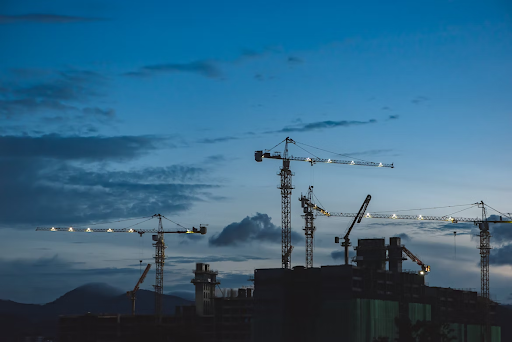
Industrial buildings can easily get pigeonholed as utilitarian.
Warehouses, factories, and commercial plants should be functional and no-nonsense, right?
Wrong.
Modern industrial settings must be as comfortable, eco-friendly, and aesthetically-pleasing as their residential counterparts. With this in mind, keep reading as we explore 6 trending materials that are reshaping industrial building design.
Glass Railings
When it comes to commercial railing systems, one material traditionally comes to mind: stainless steel.
Stainless steel is a wonderfully durable material that is easy to clean and resistant to corrosive substances commonly found in industrial settings.
However, as the role of aesthetics becomes increasingly important, a new railing material has emerged: glass.
Glass offers clear sight lines and outstanding light transmission for a bright, inviting work ambiance. It is also extremely durable and easy to maintain, making it a strong option for both interior and exterior railing applications.
Prefabricated Steel Buildings
Steel is one of the most ubiquitous materials in industrial construction. Its elite strength-to-weight ratio, weather resistance, and versatility make it ideal for any number of industrial applications.
Fast forward to 2026, and prefabrication processes are the new standard in steel building construction. Manufactured offsite into easy-to-assemble “kits,” the components are then transported to the construction site for final erection. The result is greater precision, reduced construction times, and fewer labor/machine hours needed to get the building operational. What’s more: prefabricated steel buildings are just as easy to take apart as they are to put together, making them an ideal option for transporting to a new site for a second life.
Architectural Louvers
Energy efficiency is the name of the game in contemporary construction. Not only will energy efficient structures help the business keep utility costs under control, but more and more consumers are choosing to support only those enterprises that align with their sustainability standards.
One of the best ways to promote energy efficiency in sprawling commercial structures is through the use of industrial louvers. They are installed in exterior wall openings and provide ventilation while protecting against water and debris intrusion. They help reduce reliance on electrical heating and cooling systems while ensuring optimal air quality for building occupants.
Acoustic Sound Blankets
Although ordinances vary by locality, all industrial buildings will face some sort of maximum noise output. This is to ensure public health and welfare, limit the threat of nuisance, and ensure compliance with neighborhood codes.
There are numerous ways to guarantee that the structure does not exceed maximum permissible noise levels. Sound attenuators can be applied to noisy generators and appliances. Sealing gaps in window and door frames helps, as does installing high-quality insulation in the framing.
However, one particularly innovative solution lies in acoustic sound blankets. Typically applied to exterior fencing and other peripheral enclosures, these sound absorbing blankets can limit noise transfer and reduce echoes, helping keep noise local to its origin for the ultimate in noise compliance for industrial structures.
Foundation Waterproofing
Water is the foundation of life. However, when left unchecked, it can do irreparable damage to buildings. Specifically, if groundwater infiltrates a building’s foundation, the structure immediately runs the risk of becoming unsafe for human use.
With this in mind, contemporary foundation waterproofing methods are changing the game in terms of structural viability. Consisting of a series of self-adhering mats that attach to foundation walls, these permeable membranes direct water to a dimple drainage board that leads to a subterranean piping system that moves the water away from the building. This guarantees that no matter how strong the hydrostatic pressure, groundwater will never compromise an industrial building’s foundation.
Sustainable Insulation
Greenwashing is rampant in the modern economy.
Businesses will make any claim–no matter how unethical or flat-out false–to “prove” their commitment to sustainability and the future of the planet.
This can commonly be seen in insulation materials. Some providers will extol the increase in R-value their product provides while conveniently leaving out the fact that it requires significant energy/resources to fabricate and can potentially give off toxic byproducts when exposed to high heat.
This has given rise to an increased interest in sustainable insulation products, such as hemp, sheep’s wool, and recycled denim. These materials offer an R-value to rival that of any “traditional” insulation material. However, they are far more sustainably sourced, consisting of recycled constituents and/or a low embodied energy score. This can help any industrial building improve its sustainability from sourcing all the way through the end of the product life cycle, as sustainable insulation options are also recyclable.
Take Your Industrial Building to the Next Level with Innovative Material Choices
Modern industrial buildings must be as eco-friendly, comfortable, and visually-stunning as consumer homes. From low profile glass railings to recycled denim insulation, consider any of the materials listed above that are changing the game in industrial markets. For more of the latest trends in industrial business, explore the content at Linquip for the leading insights in the sector!

