
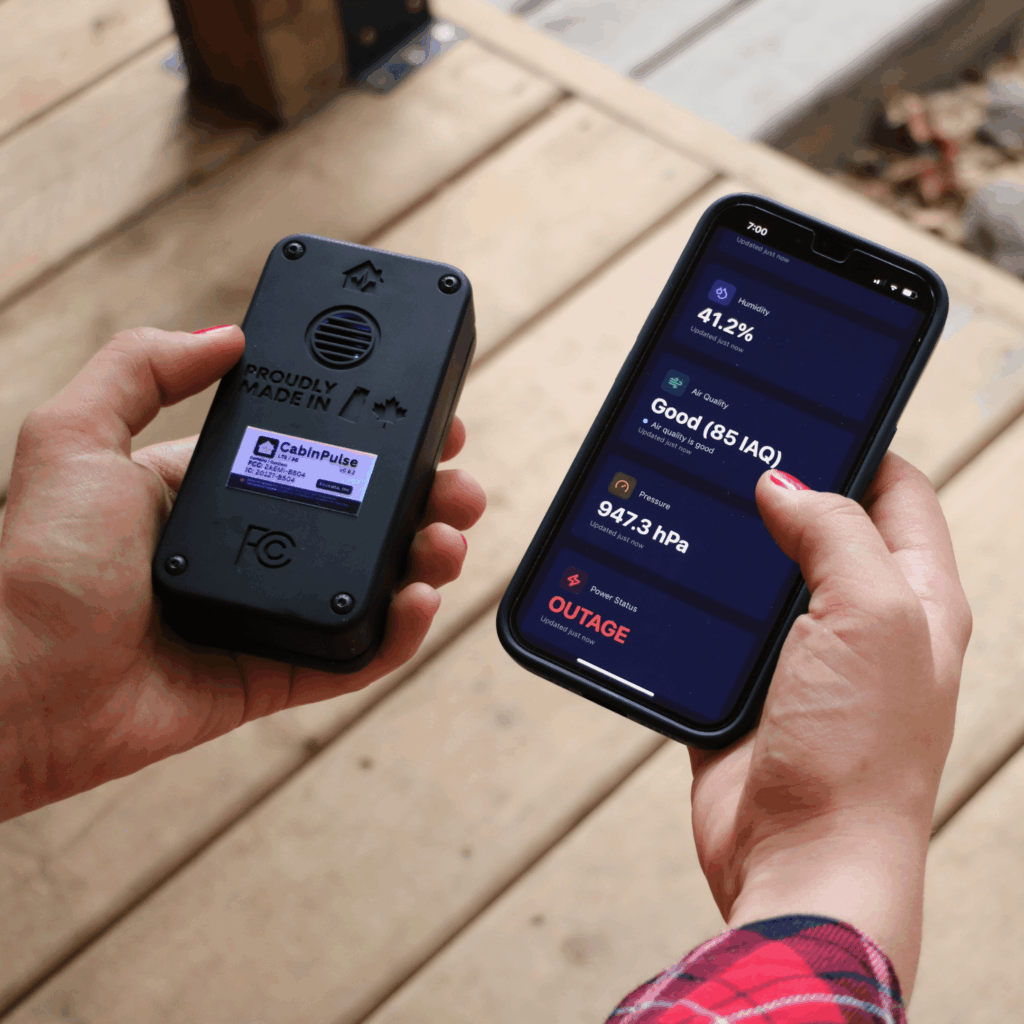
Here’s a scenario that plays out in businesses every week: A facility’s critical equipment fails during off-hours. The owner has installed a monitoring system specifically to catch these situations. But when they arrive the next morning, they discover the monitoring system never sent an alert.
Why? Because the same power event that affected the equipment also took out the WiFi. When the router died, the monitoring system went silent—exactly when it was needed most.
It’s a fundamental design flaw in how most small and medium business monitoring systems are built.
The WiFi Monitoring Paradox
Search for “equipment monitoring system” or “power outage alerts” today, and you’ll find dozens of WiFi-enabled smart plugs and monitoring devices. They’re affordable, easy to install, and they work reliably – as long as your power and internet stay up.
The core problem is simple and somewhat paradoxical: WiFi monitoring systems depend on the same infrastructure they’re meant to watch.
If you chase down the chain of dependencies:
- Your equipment needs power
- Your WiFi router needs power
- Your internet modem needs power
- Your monitoring device needs power
- All of these need to maintain their connections to each other
When power issues occur, whether that’s surges, brownouts or outages – they often affect multiple systems simultaneously. A tripped breaker might kill both your equipment and your router. A building-wide outage takes down everything at once. In these situations, WiFi monitoring goes dark at the worst possible moment.
How Critical Infrastructure Handles Monitoring
Mission-critical facilities – that’s airports, hospitals, data centers, and government installations – face a simple reality: they cannot afford monitoring gaps during infrastructure failures.
Their solution is straightforward, and distinctly different than SMEs: they use monitoring systems that operate independently of the facility’s power and networking infrastructure. These systems run on cellular connections with robust, independent battery backups, separate from building power and internet.
This approach is standard practice in environments where downtime isn’t acceptable. Data Centers use independent monitoring because their entire business is uptime. When power systems fail, they need visibility into what’s happening with backup generators, cooling systems, and equipment loads. Hospitals can’t have gaps in monitoring for refrigeration units storing medications and biological samples. Temperature excursions must be detected and documented immediately, regardless of building power status. Airports monitor HVAC, fuel systems, and backup power across massive facilities. Their monitoring infrastructure must work independently of the systems being monitored. Cold Storage Facilities face regulatory requirements for continuous temperature monitoring. Gaps in monitoring data during power events can mean compliance failures and spoiled inventory.
The common thread: when the stakes are high enough, cellular monitoring becomes the standard because it’s the only architecture that guarantees visibility during infrastructure problems.
The Real Cost of Monitoring Gaps
The financial impact of monitoring failures comes from delayed response. Consider these typical scenarios:
Weekend Power Outage A restaurant’s walk-in freezer loses power Friday night. Their WiFi monitoring system goes dark with the router. The owner discovers the problem Monday morning. The outage lasted 6 hours, but 60 hours passed before response. Total loss: $15,000 in spoiled inventory that could have been saved with immediate notification.
Circuit Breaker Trip
A manufacturing facility has a breaker trip affecting their equipment. Unfortunately, their monitoring device was on the same circuit. The monitoring system is blind to the specific failure that matters, while the rest of the building operates normally. Production time lost: 14 hours.
Internet Service Failure Power is fine. Equipment is fine. But the internet service is down. WiFi monitors can’t send alerts without internet connectivity. When equipment fails during this window, the monitoring system has no way to notify anyone until connectivity is restored.
The difference between a manageable incident and a catastrophic loss often comes down to response time. Knowing about a problem in 5 minutes versus 5 hours can mean the difference between dispatching a technician and filing an insurance claim.
Why Cellular Monitoring Architecture Is Different
Cellular-based monitoring systems are built on a fundamentally different architecture. They connect directly to cellular networks using their own SIM card and data plan—the same technology your phone uses. They don’t touch your building’s internet infrastructure. They’re also independent when it comes to power. Quality cellular monitors include battery backup. Even if building power fails completely, they continue operating and reporting. And when everything else goes dark, cellular monitors keep working. They’re designed to be the last thing reporting and the first thing alerting you.
This isn’t new technology. Cellular monitoring has been the standard in critical facilities for years. What has changed is accessibility and cost. The enterprise-grade systems that once required professional installation and cost thousands are now available in formats designed for small and mid-size operations. Companies like CabinPulse have spent years building monitoring systems for airports, data centers, and government facilities; environments where any monitoring gap is unacceptable. That same reliability is now available at price points that make sense for businesses of any size.
Understanding True Independence
It’s worth clarifying what “cellular monitoring” actually means, because not all systems marketed as “cellular” are truly independent.
True cellular monitoring:
- Has its own cellular modem and SIM card
- Operates on battery backup during power failures
- Continues reporting during local internet outages
- Doesn’t depend on any building infrastructure
Not truly independent:
- WiFi devices that can send SMS notifications (still requires WiFi)
- Systems with “cellular backup” that default to WiFi
The distinction matters because the most common failure mode – power outage affecting both equipment and networking – will disable any system that depends on your building’s infrastructure.
Making the Economic Case
The cost difference between WiFi and cellular monitoring is typically $10-50 per month. For many smaller businesses, that difference feels significant until they calculate the cost of a single missed alert.
Consider the math:
- Cellular monitoring: ~$14/month = $168/year
- Cost of one undetected 12-hour equipment failure: Varies by industry, but typically $5,000-$50,000
Even businesses with reliable power should ask themselves: “If I experience one monitoring gap per year that leads to delayed response, what would that cost me?”
For most operations with critical equipment, one prevented incident pays for years of monitoring.
Beyond direct costs, there are regulatory and insurance considerations. Many industries require documented environmental monitoring. When auditors or insurance adjusters ask “How do you know conditions were maintained during that power outage?” the answer matters. Independent monitoring systems provide the documentation that WiFi-dependent systems cannot.
When WiFi Monitoring Is Sufficient
To be clear: WiFi monitoring isn’t useless. For certain applications, it’s perfectly adequate:
- Non-critical equipment where delayed notification is acceptable
- Locations with someone always on-site
- Applications where the primary concern is usage tracking, not outage detection
- Backup monitoring in addition to a primary cellular system
The key is being honest about your risk tolerance and response requirements.
The Decision Framework
If you’re evaluating monitoring systems, ask yourself these questions:
What does downtime cost me?
Calculate it honestly. Include lost inventory, lost production, emergency service calls, customer impacts, and compliance penalties. If a 6-hour delay in notification costs more than $1,000, the economics favor cellular.
How often am I physically on-site? If your facility is attended 24/7, you might not need monitoring at all. If it’s unattended nights and weekends, cellular monitoring becomes more valuable.
Have I experienced power or internet issues in the past year? Past behavior predicts future problems. Frequent outages mean WiFi monitoring will likely fail when you need it.
Do I have regulatory or insurance monitoring requirements? Many industries require continuous, documented monitoring. Cellular systems provide the reliability and documentation auditors expect.
Could I justify the cost with one prevented incident per year? If yes, the economic case is clear.
The Bottom Line
WiFi monitoring systems serve a purpose for low-stakes applications and well-attended facilities. But if you’re running equipment that must stay operational 24/7, if undetected downtime costs you serious money, or if you’re responsible for temperature-sensitive inventory, WiFi monitoring introduces a critical vulnerability.
The facilities that cannot afford monitoring gaps solved this problem years ago by using truly independent cellular monitoring. The technology that was once exclusive to enterprise budgets is now accessible to any business that takes critical equipment monitoring seriously; systems like CabinPulse offer enterprise-grade independent monitoring for the cost of a few coffees a month.
The question isn’t whether you can afford cellular monitoring. It’s whether you can afford to keep depending on a system that fails at the exact moment you need it most.

