
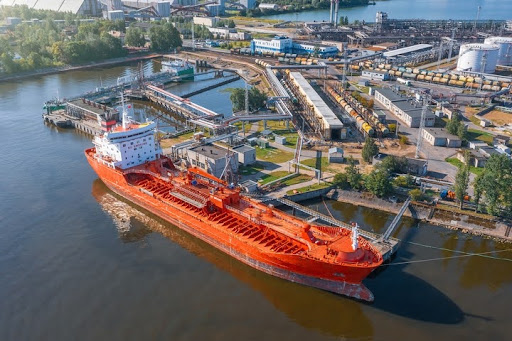
Reliable lifting systems are also usually needed to facilitate storing and maintenance operations of boats. With the increasing need to achieve quicker turn-around times, shorter down-time, notably in areas of high traffic such as marinas and service centers, the nature of the lift system used can be critical. Although traditional cable systems have been used in households over the past years, hydraulic systems have become common towards high performance, and reliability and are ideal with large volumes.
The knowledge of the differences between these two systems assist operators to make quality choices that have a direct contribution on efficiency, safety and the long-term cost of operations. The benefits of hydraulic lifts as opposed to cable systems is particularly evident in those locations where boats are serviced in high numbers on a daily basis.
Reliability And Reduced Maintenance
Another of the greatest benefits of hydraulic boat lifts is its stability under strain of intense use. Cable-based systems, like a boat house cable lift, depend on many moving parts which can get worn out, including frayed cables, worn pulley, and rust prone components. These components are parts that must be checked and changed regularly and this may cause very expensive downtimes of business, which operate around the clock.
In hydraulic systems less moving parts are employed and they are made durable. They are not as susceptible to corrosion and mechanical stress since they are utilized by enclosed hydraulic cylinders as opposed to open cables. This translates to lower maintenance requirements and hence very smooth day- to-day operations and decreasing long term costs incurred by businesses.
Consistency And Operational Efficiency
For high-volume operations, consistency in performance is essential. The movement of the hydraulic lifts are steady and level with a precise control indicating that it could be simpler to load and offload vessels of any sizes without the unacceptable jolt or imbalance. It is especially significant in the case of larger-sized boats, as the aspect of balance and stability during the lifting process is important, as it eliminates the risk of damage.
Most times, cable systems are unable to keep Netflix as precise because over a period of time, the cables may stretch asymmetrically resulting in inconsistencies in operations. The availability of hydraulic lifts is rather constant with minor fluctuations and as such, any given lift can run as safe and dependable as its predecessor. Such productivity not only enhances productivity but also eliminates risks of occurrence of accidents during increased operational times.
Safety And Risk Reduction
The issue of safety is one of the fundamental concerns in any operation at sea, the lift systems are part of the direct approach to preventing accidents. Hydraulic systems have been developed bearing in mind fail-safe characteristics so as to reduce the occurrence of sudden slip or equipment failure. When a hydraulic component fails, pressure is slowly lost and is not released immediately thus, resulting in far less risk to personnel and vessels.
The safety of cable systems is not that great. Too sudden a fall can occur with a broken cable or mechanical failure, leading to dangerous circumstances of injury to personnel and damage to premises. In peak areas where many lifts can occur in a day where dozens can take place, the hydraulic system offers additional safety and peace of mind making it the most viable option.
Speed And Adaptability
Fast turnarounds are required in a high-volume operation and the hydraulic bike lifts are very well suited to it. They can handle raising and lowering boats faster than the customary cable lifts, reducing the number of waiting and seeing more boats serviced in the same amount of time. This speed advantage can greatly enhance customer satisfaction at marinas and maintenance facilities and hence their profitability as a whole.
Hydraulic lifts can also be flexible to various boat sizes and weights, not demanding much adjustment. Longer boats may require realignment of cable systems or possessing of tension, to re-align the cable system. This makes the process slow. Hydraulic lifts are flexible, and therefore, a better choice of lift in a facility that processes various fleets on a daily basis.
Long Term Cost Benefits
Though a hydraulic system may cost more to acquire than a boat house cable lift, in some cases, the financial long-term advantages will justify the front-end expense. Maintenance will be less frequent and part replacements will reduce and downtimes will be minimal resulting in a lower cost of operation over a period of time. Also, hydraulic lifts that have been made efficient allow businesses to deliver more customers within a shorter time and, therefore, have an even greater revenue potential.
Although cable is less costly during installation, it tends to accrue more costs in terms of maintenance and capital costs in short circuit and downtimes. In an operation whose profitability depends directly on reliability and efficiency of the operation, the value of hydraulic lift in its long term benefit can be realized.
Environmental Considerations
The other consideration is the environmentally related impact of the system. Newer models of hydraulic boat lift are eco-friendly with ergonomic features like sealed hydraulic units that do not spill any fluid in the water. This would play the role of environmental regulations as well as the preservation of marine life.
Cable systems can, however, add to the environmental risk with an element of the rusted part or lubricant contaminating the water. Hydraulic lifts are especially useful in cases where businesses are in sensitive or protected waterways where cleaner and safer working is the added advantage.
Conclusion
These classic cable systems are not attractive when the desired target environment is high-volume operations where efficiency, safety and reliability are paramount concerns. With hydraulic boat lifts offering advantages over cable systems, it is desirable that more hydraulic boat lift companies appear and generate benefits to the target environment threatened to be disappeared by the traditional cable systems. They are less demanding in terms of maintenance, exhibit stable performance, enhanced safety, higher speed with a profound economical cost savings and with minimal environmental hazards. Although a boat house cable lift is likely to remain a good solution in smaller or infrequent settings, hydraulics are better suited to heavy-usage, high-capacity facilities.
Pouring money into hydraulic lift technology is not merely an upgrade in operations. It is a sustained agreement to efficiencies, safety and customer contentedness in the ship Aisle. The hydraulic boat lift is the most reasonable and progressive solution that can be accepted by businesses with the aim to increase performance and sustain the competitive advantage.

