
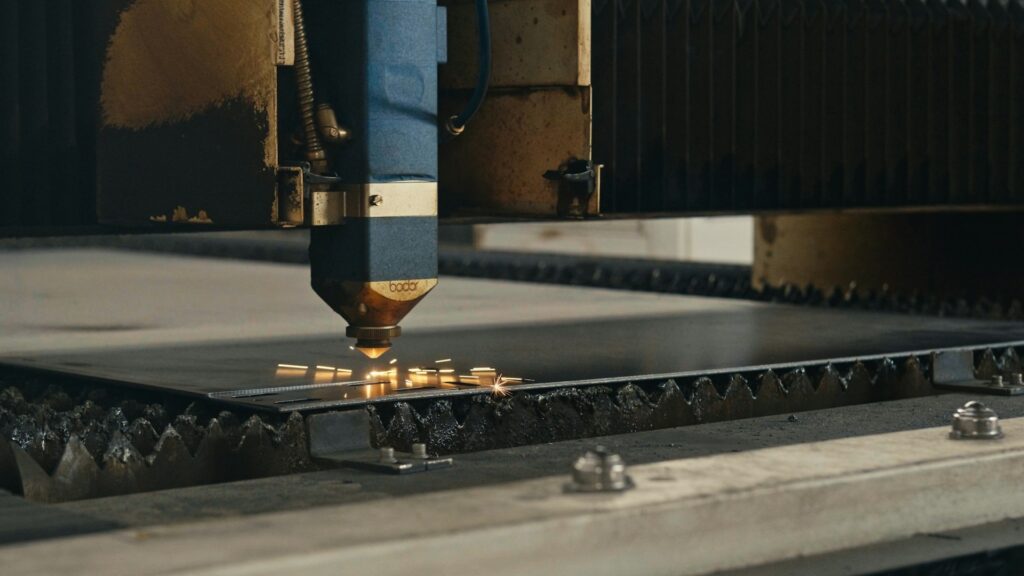
Industrial laser cutters require precision components to maintain tight tolerances and consistent output. Replacement parts that fail to match original equipment manufacturer (OEM) specifications cause unexpected downtime, rejected workpieces and costly delays. Verifying each component meets exact standards before installation prevents expensive machine failures that can halt operations for days.
Confirming that industrial laser cutter parts meet OEM standards starts with a methodical inspection process before installation. Engineers and procurement specialists who skip these verification steps risk introducing components that degrade machine performance or fail prematurely under operational stress.
1. Match Electrical and Mechanical Tolerances
A structured approach to checking electrical and mechanical tolerances protects equipment investments and production schedules. Alternative Parts, Inc. (API) has supplied high-quality OEM-standard replacement parts since 1994, serving manufacturers across aerospace, automotive, electronics, appliances and industrial metal fabrication that rely on laser cutters, turrets, press brakes and shears.
Cross-referencing technical specifications against the exact machine model catches compatibility issues before they become expensive problems. Procurement teams should:
- Verify wattage ratings and voltage requirements: Incorrect electrical specifications can damage control systems or create fire hazards in high-power laser applications.
- Measure physical dimensions with precision tools: Even minor deviations in lens diameter or nozzle bore size alter beam characteristics and cut quality across production runs.
- Check focal length specifications: Compare against the manufacturer’s original documentation to maintain proper standoff distance and focus accuracy throughout the cutting envelope.
- Confirm connector types and pin configurations: Ensure compatibility with the machine’s existing wiring harness to avoid custom modifications that void warranties or introduce failure points.
2. Inspect Physical Construction and Materials
Visual and tactile examinations reveal manufacturing defects that specification sheets often fail to capture. These inspection steps catch quality issues early:
- Examine lens coatings under proper lighting: Look for streaks or inconsistencies that scatter the beam and reduce cutting efficiency during high-precision work.
- Test mirror mount stability: Apply gentle pressure to ensure secure positioning during high-speed head movements that generate substantial G-forces.
- Verify nozzle materials: Confirm the component can withstand the thermal demands of specific cutting applications, such as thick steel processing that generates extreme heat.
- Assess overall build quality: Check surface finish, threading precision and the presence of burrs that could introduce contaminants into the optical path.
API employs rigorous inspection protocols to verify that each nozzle, lens and optical component meets original tolerances and material specifications. This quality control process catches manufacturing defects before they reach production floors, protecting facilities from performance degradation caused by substandard parts.
3. Conduct a Physical Acceptance Test
Before committing to a bulk batch, technicians should mount the part on a representative fixture to confirm true compatibility under realistic conditions. Testing beam alignment and focus calibration with a candidate nozzle or lens installed on the actual cutting head exposes integration issues that paper specifications miss. A component might meet all listed tolerances yet still produce substandard results due to subtle material differences or manufacturing variations.
The Financial Impact of Unreliable Machinery Components
Unplanned downtime carries substantial financial consequences for industrial operations. The world’s 500 largest companies lose about 11% of annual revenue to unplanned downtime, while the average large plant loses roughly $253 million per year. Those figures make clear why proper verification matters before a replacement component reaches the production floor.
Laser cutting systems built for industrial manufacturing are substantial capital investments designed to operate reliably for extended periods. Fiber lasers last roughly 8 to 14 years when maintained with quality components that prevent unexpected breakdowns. API’s operations managers, purchasing agents and shop owner clients understand that installing unverified parts sacrifices this longevity and exposes their facilities to production delays. Same-day shipping of in-stock parts helps these facilities minimize downtime when unexpected failures happen.
Why Knockoffs Cause Machine Downtime
When counterfeit components enter production equipment, they introduce specific failure modes that authentic OEM parts avoid. Nozzles with poor thermal conductivity generate excessive heat buildup, warping the component during extended cutting runs. This deformation shifts the gas flow pattern and degrades cut quality until the nozzle fails completely.
Inferior lens materials break down rapidly under high-intensity laser exposure, and the resulting optical distortion scatters the beam and reduces cutting power. What appears as a modest up-front savings of $50 or $100 per part translates into thousands of dollars in lost production time when the component fails mid-shift and forces an emergency shutdown.
Partnering With Specialists Who Truly Understand Equipment
Sourcing OEM laser cutter replacement parts calls for suppliers who maintain strict quality control protocols, stock extensive inventories and provide expert technical support to address the complex compatibility questions. When shipping capabilities deliver same-day fulfillment, facilities minimize the window between part failure and machine restoration.
Deep knowledge of various equipment brands ensures that procurement teams receive components compatible with their specific machinery. Through competitive pricing and same-day fulfillment on in-stock items, API delivers OEM-standard quality while helping customers control costs.
OEM Quality at a Fraction of the Cost
Constant pressure to reduce expenses without compromising equipment performance defines the daily reality for engineers and procurement specialists. API addresses this challenge by delivering components that meet OEM specifications while offering prices 10% to 70% below standard OEM rates. Rather than cutting quality standards, this cost advantage stems from efficient sourcing networks and streamlined distribution.
Parts undergo stringent inspection protocols to verify that they meet original tolerances and material specifications. Access to nozzles, lenses, optics and control system upgrades built to meet OEM specifications comes at a fraction of the investment. Facilities can maintain their industrial laser cutter parts inventory without straining capital equipment budgets thanks to this value proposition.
Extensive Inventory and Expert Support
API’s foundation in Amada laser parts extends across other brands, so complex facilities can rest assured they are covered. When compatibility questions and application-specific requirements arise, its factory-trained technicians provide the specific guidance procurement teams need. Facilities facing unexpected failures benefit greatly from the company’s same-day shipping on in-stock parts.
When a needed component isn’t immediately available, API’s expert sourcing network locates hard-to-find parts through established relationships with manufacturers and specialized suppliers. Such comprehensive support transforms parts procurement from a frustrating scavenger hunt into a streamlined process backed by knowledgeable professionals.
Frequently Asked Questions
Industrial professionals often encounter the same concerns when sourcing components for laser cutting equipment. These answers address common questions about specifications, quality and sourcing strategies.
What does OEM mean for laser replacement parts?
For laser replacement parts, OEM refers to the original equipment manufacturer specifications that define how a component should fit and function in a specific machine model. These specifications can include electrical ratings, mechanical tolerances, physical dimensions, connector types, focal length requirements and material standards.
Replacement parts that meet OEM specifications help maintain compatibility, cut quality and equipment reliability without introducing unnecessary performance risks.
Why do low-quality replacement parts cause downtime?
Substandard components introduce failure modes through poor thermal conductivity, rapid material degradation and dimensional inconsistencies. These defects create heat buildup and fitment problems that force emergency shutdowns. A single failed part can trigger production losses. Preventing these failures through proper verification protects both equipment and production schedules.
How long do fiber lasers typically last?
Fiber lasers operate reliably for 8 to 14 years when maintained with quality replacement parts. Proper maintenance practices and verified components prevent premature failures that shorten equipment lifespan. Facilities that invest in high-quality laser cutting systems can expect extended operational lifespans when parts meet original specifications.
How do I verify that replacement parts meet OEM specifications for laser cutters?
Verification requires matching electrical ratings and mechanical tolerances to the manufacturer’s documentation for the specific machine model. Physical construction inspection checks coating quality, material integrity and dimensional accuracy. Physical acceptance tests on representative fixtures confirm beam alignment and focus calibration under realistic operating conditions before procurement teams commit to larger purchases.
What should I look for when sourcing OEM replacement parts for a laser cutter?
Evaluation should focus on quality control protocols, inventory depth and technical expertise. Fast shipping capabilities help reduce downtime windows after part failures, and suppliers with expertise across different brands help procurement teams avoid compatibility roadblocks down the line. Access to hard-to-find components through established sourcing networks eliminates delays when standard distributors cannot fulfill specialized requirements.
Safeguarding Operations With Proven Components
Unverified replacement parts introduce catastrophic risks to production operations. Downtime accumulates, customer commitments fail and expensive equipment suffers permanent damage. Operations managers who implement rigorous verification protocols shield their facilities from these cascading failures. API delivers the OEM-standard quality, competitive pricing and expert support that ensures long-term operational success.

