
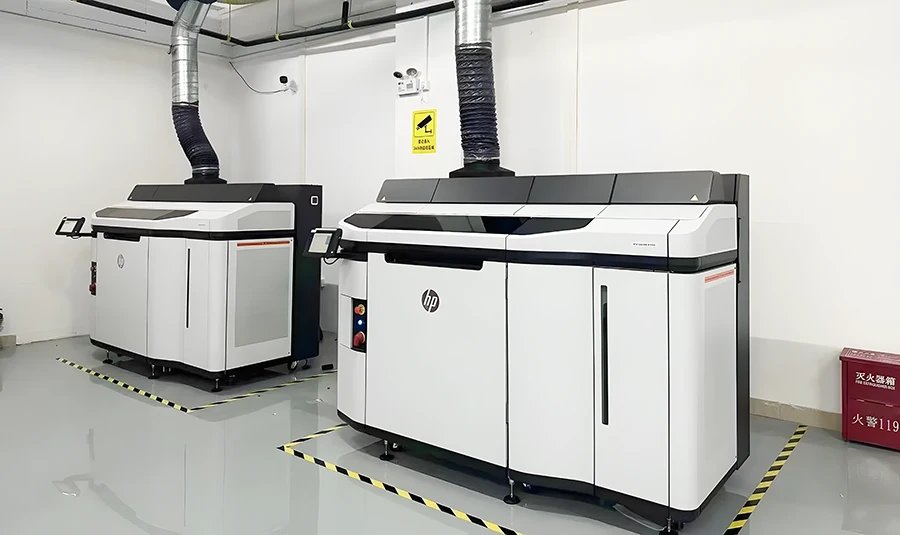
Once the product design is done, the product goes into the prototype production phase. While the companies differ slightly in their production process of the rapid prototypes, the steps usually follow the one explained below:
- Data Output
- Drawings
- Process Diagram
- BOM (Bill of Materials)
- Business
- Find Manufacturer
- Quotation
- Contract Signing
- Advance Payment
- Processing
- DFM (Design for Manufacturability)
- Programming
- Material Ordering
- Manufacturing Method
- Manual Processing
- Polishing and Grinding
- Surface Treatment
- Inspection
- Appearance
- Functionality
- Dimensions
- Quantity
- Delivery
- Packaging
- Delivery
- Final Payment
- After-Sales Service
- Quality Issues
- Quantity Issues
- Other Issues
Detailed Explanation:
1. Data Output
Drawings
3D Drawings: Usually the 3D drawings are provided in formats like STP by the structural engineers for the engineers of the rapid prototyping factory to open with software like Pro/E, UG, or SolidWorks.
2D Drawings: If no special precision is needed for plastic rapid prototypes, 2D drawings may not be necessary. 2D drawings are recommended for metal parts with high precision. They can be in the DWG/DXF or PDF formats.
Process Diagram:
CMF Process Diagram: This is about the product’s appearance design, which was designed by ID or CMF designers. It defines the color (C), the material (M) and the finish (F) for each component.
Silk Screen Files: These are generally given in CDR or AI format and are used for the creation of film for mesh screens.
BOM (Bill of Materials):
The BOM is a list of the materials and specifications for each part. It is required for quoting and final part quantity verification. Part names, drawings, materials and production requirements should be specified in the BOM so that communication is not necessary during the production phase and so that production is more efficient.
2. Business
Find Manufacturer:
In larger companies, procurement staff handles the supplier search, quotes, and progress tracking. Engineers typically provide the correct documentation.
In smaller companies, engineers or senior management are usually responsible for finding manufacturers and following up on the quotes and progress. Sometimes, they may also need to visit the factory to confirm the production or assembly process.
Quotation:
1. Data Check
The quotation process starts with the data received by the rapid prototyping factory’s quotation staff to check the completeness of the data. This results in an accurate and detailed quotation since more accurate and detailed data including CMP 3D model, technical drawings and materials specifications are all available. Pricing discrepancies or delays can be caused by missing or unclear information. The more complete the data, the more accurate the cost estimation and production planning.
2. Drawing Review
The team also verifies all parts in the technical drawings against the Bill of Materials (BOM) to ensure pricing accuracy. An emphasis is put on quantities, because discrepancies can make an enormous difference to the final cost. It is dealt with any inconsistencies before proceeding. This step prevents errors in production planning and the quotation will be exactly the same as the project requirements.
3. Process Analysis
The project’s material selection, processing methods and surface treatments are evaluated for feasibility. These factors directly influence the unit cost and the production complexity. The team checks whether the materials and manufacturing techniques requested are sensible for the design requirements and cost-efficient. Some suggestions may be made to bring the production to the optimal level while keeping to the quality standards.
4. Final Quotation
The factory then based on the confirmed BOM is able to provide a final quotation, including the price, production lead time, payment terms and applicable taxes. In the case that no terms are agreed upon, the two parties talk and adjust as needed until a mutual agreement is obtained. This will provide clarity and transparency before the production begins so as to avoid any misunderstanding and to allow for the smooth execution of the project.
Contract Signing:
Not all contracts are required, it depends on the relationship of the two parties, the order size and the operational flow. There are usually two types of contracts if signed.
- Non-disclosure Agreement (NDA): Protecting product confidentiality during the R&D phase, non-disclosure Agreement (NDA).
- Purchase Contract: When this contract is signed, it means the client has ordered and now authorizes the rapid prototyping factory to start work on the project.
Advance Payment:
In particular, advance payments are usually required, especially in the case of new collaborations, 50%. Once the advance is received, the rapid prototyping factory starts producing.
3. Processing
DFM (Design for Manufacturability):
All parts will be analyzed by the rapid prototyping factory engineers for manufacturability. Split processing may be needed on complex parts. Parts may be split and assembled later if CNC machining is unable to reach certain areas. Engineers will optimize the design to reduce costs for metal CNC parts.
Programming:
Programming of CNC parts is done by the factory’s programmers using Pro/E, SolidWorks, UG, and CAM software (Mastercam, Powermill) For sheet metal parts, no programming is required, these parts are only cut by a laser or punch.
Material Ordering:
According to the programmer’s specifications, materials are ordered. If production delays are to be avoided, special materials will need to be ordered in advance. These will be listed in the BOM if standard components such as fasteners are needed.
Processing Method (CNC):
Typically large parts are CNC machined, and small and complex parts are printed through 3D printing.
Pre programmed 3D file data is used for automated CNC milling of the material that is fixed on the CNC machine.
Manual Processing:
In the case of CNC machining, the parts are cleaned to remove burrs and other debris. After the part, it is compared to the 3D file and any discrepancies are corrected if necessary.
Manual repairs are made where CNC machining cannot go, such as deep holes or inner angles.
Polishing and Grinding:
It depends on the material used for grinding and polishing using appropriate tools. The intention is to retain the product’s appearance and create a smooth surface. For line accuracy, special attention is required to avoid the product’s appearance being altered.
Adhesive Bonding:
When machining limits are exceeded, parts are split for manufacturing and then bonded together. The trick is to keep part size and appearance by making sure the bonding is smooth and seamless.
Pre-Assembly:
Pre assembly checks are made to make sure that the parts fit together and that there is no interference during assembly. The fit and function are adjusted as necessary.
Surface Treatment:
- Spray Painting: Customer specifications are used to paint parts and the parts are cured in an oven. The surface of the part has to be properly smoothed before painting.
- Electroplating/Oxidation: Some parts require polishing prior to electroplating and/or oxidation. Usually, oxidation is applied to aluminum alloy parts.
- Silk-Screening/Engraving: Based on the customer’s provided artwork, silk-screen printing is done. As required, it is also done by laser engraving.
4. Inspection
Appearance:
- Inspect all parts to determine if they are within the specified colors and finishes.
- Check for uniform gaps, dimensional variations, and print placement.
Functionality/Structure:
- Machine internal features such as screw holes, nuts, and threads.
- Moving parts should be checked for stick or noise and for smoothness.
- Make sure no interference during assembly.
Dimensions:
- Check that the key dimensions conform to the specifications in the 2D drawings.
Quantity:
- BOM, count the parts according to the BOM to ensure that the quantity is the same as the order.
- If all goes well, a quality inspection report is issued.
5. Delivery
- Packing: Parts are packed with consideration of their characteristics and with protecting fragile items.
- Factory delivery: The products are delivered by the factory’s delivery service or a third-party delivery service. The factory usually pays the shipping costs.
- Final Payment: After the customer confirms the receipt and condition of the items, the final payment is made.
6. After-Sales Service
- The rapid prototyping factory usually handles any issue regarding quality or quantity at no extra charge.
- However, the factory may still cooperate to solve smaller problems for the issues caused by the customer, but larger ones may have additional charges depending on the relationship.
Conclusion
To conclude, though price and quality are important in any business relationship, good after-sales service is equally important for long-term partnerships. A good after-sales service is one way to ensure customer satisfaction, and build trust and loyalty to the brand. Lastly, it gives customers a sense that their investment is more than going down the drain, that the company is reliable and trustworthy.
After-sales support is effective when it has timely assistance, product maintenance, warranties, responsive customer service, etc. Not only do these elements account for a few potential problems, but they also facilitate a nice experience, ensuring broadenings of the likelihood of repeat business and referrals. After-sales service is given high importance by companies which makes it different from competitors and builds strong relationships with the customers.
The enthusiasm of this sort of business is shown in the fact that even after the sale, there is so much commitment to customer satisfaction, which naturally leads to loyalty, long term engagement, and most importantly helps build a solid reputation in the business. Finally, good after-sales service is not only a service function, but a strategic tool to ensure long term success and growth.

