
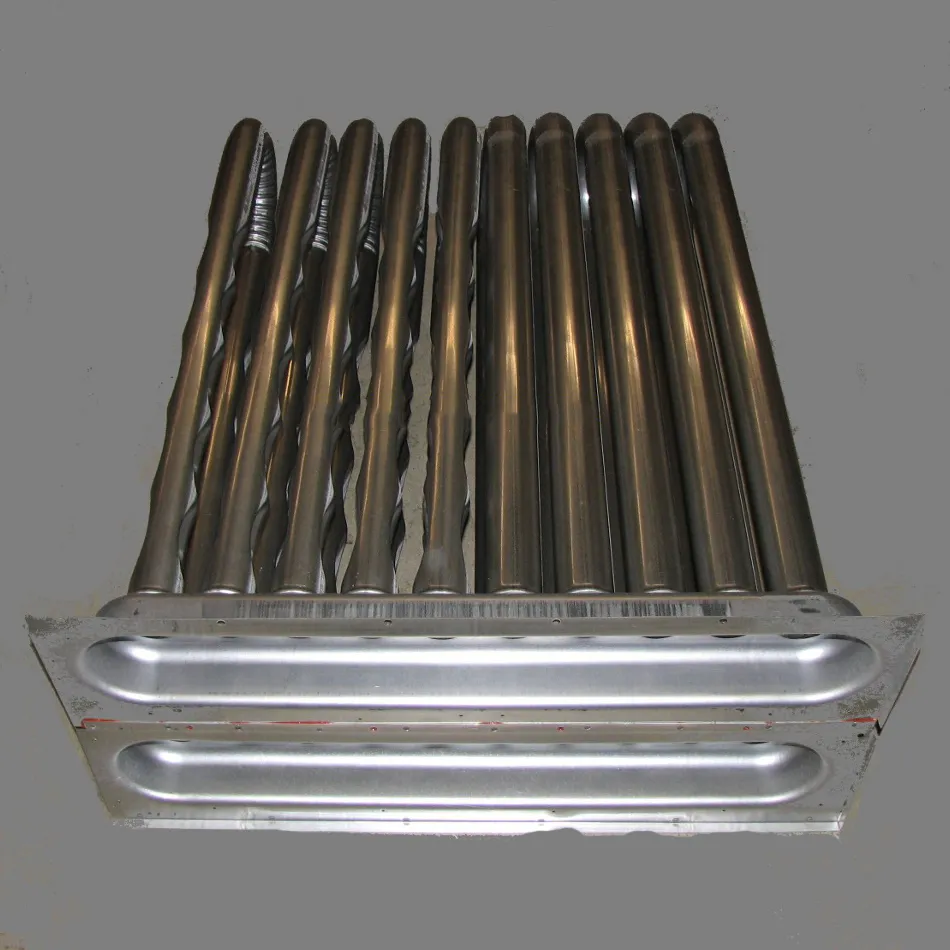
In industrial heat exchangers, performance depends not only on design and material selection but also on the condition of the tubing surface. The smoothness and uniformity of a tube’s interior and exterior directly affect how efficiently heat is transferred between fluids. A finely finished surface promotes optimal flow, minimizes fouling, and enhances long-term durability. Conversely, a poor finish can reduce efficiency, increase maintenance requirements, and shorten the lifespan of the equipment.
The Relationship Between Surface Finish and Heat Transfer
The heat transfer process within an exchanger relies on direct and consistent contact between the fluid and the tube wall. Any surface irregularities increase thermal resistance and disrupt the smooth flow of the working fluid. A polished, uniform surface helps maintain steady fluid motion and more effective heat transfer.
When the inside of a tube is rough, small pockets of turbulence develop. In controlled amounts, turbulence can improve mixing and enhance heat exchange, but excessive roughness creates drag and localized heating. In systems that demand precise temperature regulation, even minor variations in surface finish can cause measurable drops in thermal efficiency.
Fouling and Corrosion Behavior
Fouling, the accumulation of unwanted material on a heat transfer surface, is one of the leading causes of efficiency loss. Deposits of scale, oil, or biological growth act as insulation, reducing heat flow and increasing pressure drop. A smooth, nonporous surface helps prevent fouling by limiting areas where particles or contaminants can adhere.
Corrosion resistance also improves with a fine surface finish. Surface defects or roughness can trap moisture or chemicals, creating points where corrosion begins. Passivated stainless steel surfaces resist pitting and crevice corrosion, extending the service life of the tube and maintaining consistent thermal performance.
Surface Finish and Fluid Flow
The smoothness of the tube interior directly influences fluid dynamics. While some roughness can increase turbulence and improve heat transfer, excessive irregularities elevate friction losses and pumping requirements. The correct finish strikes a balance between promoting efficient heat transfer and minimizing energy consumption.
In sanitary applications such as food, pharmaceutical, or beverage processing, an extremely smooth internal finish is required to prevent bacterial buildup and contamination. Industrial settings may accept a slightly rougher surface if higher turbulence contributes to process efficiency.
The Role of Material and Manufacturing
The final quality of a tube’s surface depends on both the base material and the manufacturing process. Stainless steel remains a preferred choice due to its corrosion resistance and stability at elevated temperatures. Grades such as 304L, 316L, and duplex 2205 provide excellent mechanical and chemical properties for demanding environments.
Manufacturing methods like bright annealing, in-line polishing, and cold working directly influence the surface finish. Automated polishing systems allow precise and consistent results over long tube lengths, ensuring uniform performance in large-scale heat exchanger installations.
Measuring Surface Quality
Surface roughness is quantified using parameters such as Ra (average roughness) or Rz (maximum peak-to-valley height). For high-performance heat exchangers, an internal finish equivalent to 180 grit or finer is often specified. Maintaining such precision requires advanced process control and continuous inspection.
In modern production lines, in-line laser measurement systems monitor parameters like straightness, ovality, and smoothness in real time. These controls ensure that each tube meets or exceeds customer and industry standards before leaving the mill.
The Value of Manufacturing Precision
Reliable operation begins with high-quality tubing. Precision-made heat exchanger tubing offers consistent straightness, excellent weld integrity, uniform wall thickness, and a finely polished interior that promotes efficient heat transfer. Manufacturers such as United Industries utilize in-line production systems with hydrogen bright annealing and continuous inspection to achieve this level of precision.
Their ability to produce stainless steel and duplex tubing in lengths up to sixty feet minimizes handling and ensures uniformity from start to finish. The combination of controlled annealing, polishing, and rigorous testing results in tubing that performs dependably under thermal and mechanical stress while resisting corrosion and fouling over extended service periods.
Conclusion: Surface Finish Defines Efficiency
The internal surface of heat exchanger tubes may seem like a small detail, but it has a major impact on system performance. A smooth, consistent finish improves heat transfer, reduces fouling, and enhances resistance to corrosion. These advantages translate into higher efficiency, lower maintenance costs, and longer service life.
By selecting high-quality heat exchanger tubing, engineers ensure that every unit operates with maximum reliability and thermal efficiency. Attention to surface finish during manufacturing ultimately defines how well a heat exchanger performs throughout its operational life.

