
Choosing a reliable supplier for dry type transformers protects your facility from failures that halt production and drive up maintenance costs. Industrial environments depend on these units to deliver consistent power to equipment while maintaining safety standards that protect personnel and assets.
Evaluating suppliers requires careful attention to track records, lead times, warranty strength and custom engineering capabilities.
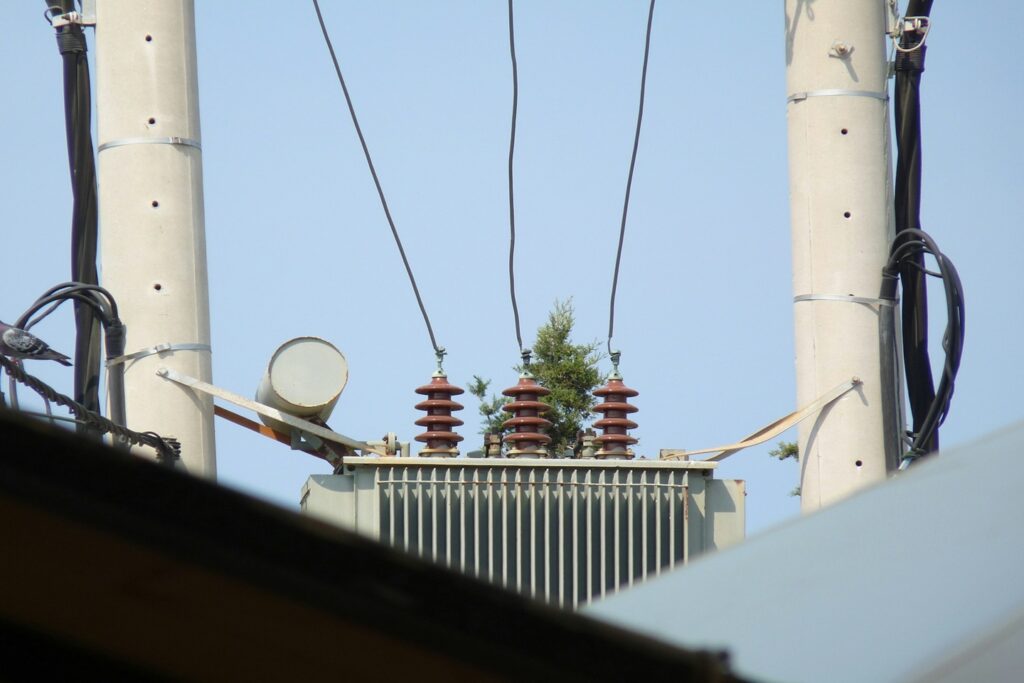
A transformer providing power to a facility’s equipment. Photo by Vasilis Caravitis on Unsplash
The Role of Dry Type Transformers in Your Facility
Dry type transformers step the voltage up or down to match specific industrial equipment power requirements. Unlike liquid-filled models that use oil for cooling and insulation, these units rely on air circulation and solid insulation materials.
The U.S. Department of Energy mandates specific energy conservation standards for these transformers to ensure consistent performance and energy savings across industrial applications. Facilities that choose compliant units benefit from lower operating costs and reduced environmental impact.
Maximum fire safety stands out as the most compelling advantage. Without oil, these transformers eliminate the risk of oil-related spills or fires. This makes them essential for occupied spaces, manufacturing floors and heavily regulated environments where personnel safety drives equipment decisions.
These units provide galvanic isolation between primary and secondary circuits to limit fault propagation and protect sensitive electronics from power fluctuations. Maintenance demands stay minimal compared to liquid-filled alternatives. Facilities only need to perform periodic visual inspections and dust removal rather than the oil testing, filtering and replacement that other models require.
Key Factors to Evaluate in a Transformer Supplier
Suppliers vary widely in their capabilities and commitment to customer success. Understanding which factors set exceptional providers apart helps you avoid common pitfalls such as unexpected downtime and project delays.
Supplier Reputation and Reliability
Partner with proven providers to reduce the risk of equipment failures that lead to production shutdowns and emergency repairs. Look for companies with decades of experience and documented evidence of reliable operation across diverse industrial applications.
Manufacturing Lead Times and History of Project Delays
Extended lead times can derail construction schedules and delay facility openings. Clear timelines for both catalog and custom-built units help keep your projects on track. Ask potential partners about their average delivery schedules and whether they maintain stock for common configurations.
Warranty Coverage and Post-Sale Support
Multiyear warranties on new and remanufactured units provide long-term protection against defects and premature failures. Post-sale support matters just as much. Technical assistance, troubleshooting guidance and emergency replacement services extend the value of your partnership.
Options for Custom Specifications
Standard catalog units serve many applications well, but unique facility requirements sometimes demand custom solutions. Voltage requirements, physical dimensions and environmental conditions may require specialized engineering. Find a partner who excels at reverse-engineering existing units or building equipment to exact requirements.
5 Top-Rated Suppliers of Dry Type Transformers
Five suppliers stand out based on build quality, reliability records, warranty offerings and ability to deliver on schedule. This assessment draws from publicly available information about each enterprise’s capabilities and market reputation in the dry type transformer industry.
1. ELSCO Transformers
ELSCO Transformers brings over 100 years of expertise to industrial facilities seeking proven performance. The brand has reverse-engineered, repaired and rebuilt thousands of failed units, giving them deep insight into what causes equipment failures and how to prevent them.
Its proprietary design has achieved zero failures since 1988, directly addressing the concerns that keep facility managers focused on uptime. ELSCO delivers industry-leading lead times on custom build-to-order units and backs its work with premium warranty coverage, including five years for new dry type units and three years for remanufactured models.
Key features include:
- Handling emergency replacement services
- Reverse-engineering obsolete or discontinued transformer models
- Manufacturing custom units to exact voltage and dimensional specifications
2. Hammond Power Solutions
Hammond Power Solutions is a major North American manufacturer serving healthcare, commercial construction and industrial sectors. Multiple global production locations allow the entity to support projects across different regions with local engineering and technical resources.
Its extensive catalog includes both standard configurations and custom-engineered solutions. Hammond maintains large inventories of commonly specified models to reduce wait times for facilities with urgent equipment needs.
Key features include:
- Maintaining certified quality management systems across manufacturing facilities
- Engineering transformers for specialized applications
- Supporting international projects with region-specific voltage and certification requirements
3. Maddox
Maddox specializes in rapid fulfillment for both new and reconditioned equipment. Its business model focuses on maintaining ready inventory and providing flexible procurement options, including purchases, rentals and trade-ins.
The organization stocks a wide range of unit types and sizes. Rental programs address situations where facilities need temporary power solutions during planned outages or while permanent equipment undergoes procurement cycles.
Key features include:
- Renting out transformers for short-term projects or emergency situations
- Purchasing used transformers to offset new equipment costs
- Delivering reconditioned units with faster lead times than new builds
4. Olsun Electrics
Olsun Electrics focuses on engineering solutions for challenging industrial environments. Its technical team develops units that address extreme temperatures, corrosive atmospheres, space constraints and other application-specific requirements that standard catalog products cannot accommodate.
In-house fabrication capabilities give Olsun control over enclosure design and component production. Steel housings, weather shields and custom mounting configurations are all manufactured at its own facility.
Key features include:
- Fabricates custom steel enclosures and weather-resistant housings
- Engineers transformers for marine and offshore applications
- Designs units that meet unique electrical codes and regional standards
5. WR Transformers
WR Transformers concentrates on extending the operational life of existing assets through repair, rewinding and remanufacturing services. Its technical team performs field testing to assess equipment health and identify problems before complete failures occur.
Remanufactured units undergo comprehensive rebuilds and come with warranties that provide performance assurance. This approach helps facilities maximize return on previous investments while maintaining operational continuity.
Key features include:
- Performs on-site field testing and diagnostic services
- Rewinds transformers to restore original electrical performance
- Rebuilds units with updated insulation materials and improved cooling systems
Find the Right Industrial Equipment Power Partner
The supplier you choose should match your facility’s most pressing needs. Whether you prioritize zero-failure track records, rapid custom builds or comprehensive post-sale support, the evaluation framework above helps you move forward with confidence.
Your decision directly impacts operational uptime and long-term maintenance costs.

