
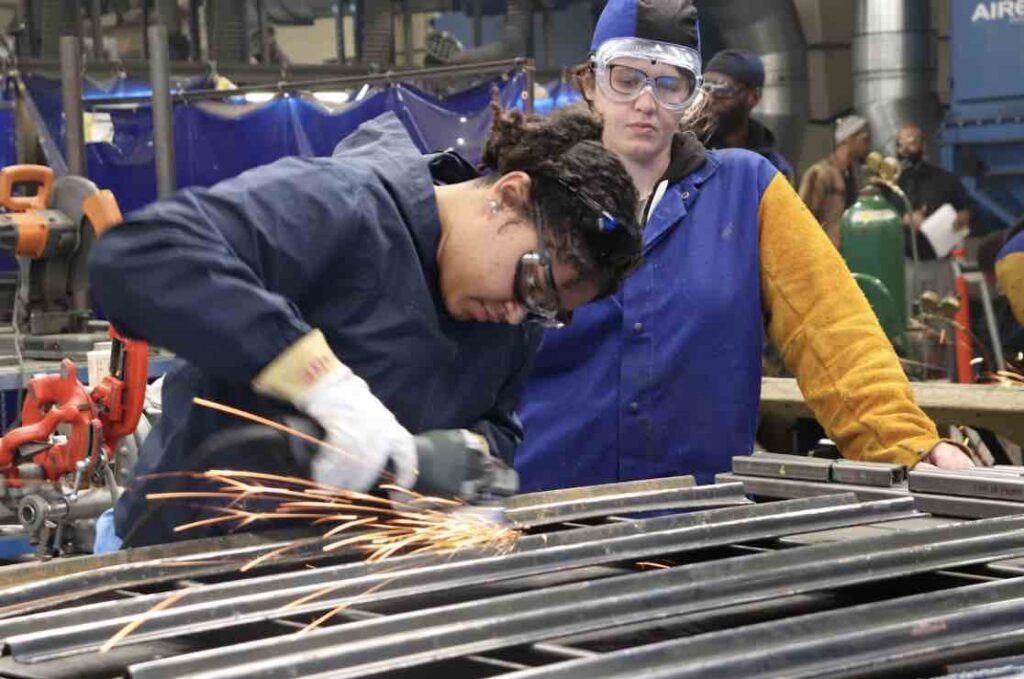
Industrial facilities operate under constant production pressure, and that pressure often exposes gaps in workers’ understanding of the hazards around them. When training fails to address the specific risks employees encounter in their daily tasks, even those with experience can miss critical warning signs. Effective compliance programs close that gap by ensuring training reflects the actual conditions of the workplace rather than generic safety concepts.
The Staggering Financial and Operational Costs of Poor Compliance Training
Private industry employers reported nearly 2.5 million total recordable cases of nonfatal workplace injuries and illnesses in 2024, revealing the scale of risk businesses must manage. When training does not reflect the hazards workers face, employees may miss warning signs or struggle to respond safely. An incident can bring medical and workers’ compensation costs, lost work time and production disruptions that extend beyond the initial event.
Research on workplace safety interventions demonstrates that proper training improves outcomes across multiple measures, including regulatory compliance and worker participation in safety practices. The financial impact of workplace incidents is substantial, with direct workers’ compensation costs alone reaching close to $1 billion per week across industries. These figures underscore why effective safety training should be viewed as a practical investment in risk reduction rather than a compliance formality.
What to Look for in Industrial Compliance Training Programs
Industrial facilities need training that reflects the hazards employees encounter in their specific roles and work areas. Sessions should be flexible enough to accommodate different shifts and reinforce essential lessons as workplace conditions change.
Customizable compliance training for workplaces allows organizations to address relevant topics without assigning the same generic program to every employee. It helps ensure that line workers, supervisors and managers receive instruction tailored to the risks they actually manage.
The solutions in this roundup were selected for their relevance to industrial workplaces, the range of compliance topics they cover and their options for tailoring training to a company’s needs.
Top Compliance Training Solutions for Industrial Organizations
Industrial organizations can choose from programs focused on job-specific safety, broader workplace compliance or both. The providers below offer different ways to train manufacturing teams, making it important to consider how well each program fits a facility’s risks and workforce.
Traliant: Best for Customization and Risk Mitigation
Traliant offers industrial and manufacturing training with role-based content and scenarios that reflect situations employees may encounter at work. Organizations can customize training to include their own policies and procedures, while mobile-friendly delivery helps reach employees across shifts and facilities. Its courses cover workplace harassment, violence prevention, and environmental health and safety, allowing teams to address multiple compliance areas through a single provider.
The platform acts as a continuous compliance and risk companion, moving beyond simple training to reduce workforce risk and drive defensible outcomes. Course material uses realistic scenarios featuring professional actors to accurately reflect real industrial environments. Its in-house legal team updates course content as requirements change and offers guidance beyond the lessons themselves, positioning the platform as a full-service compliance partner rather than just a training vendor.
Vector Solutions: Best for 3D Animated Skills Training
Vector Solutions offers 3D animated courses that help manufacturing employees learn about industrial equipment and processes. Its training covers skills and general workplace safety, making it an option for facilities that need both types of courses. Vector’s manufacturing LMS lets organizations assign and track training across their workforce.
The platform includes interactive simulations that allow workers to practice equipment operation in a virtual environment before handling actual machinery. Companies that prioritize visual learning methods may find the 3D animation approach useful for conveying complex mechanical processes.
HSI: Best for Comprehensive EHS Management
HSI combines manufacturing safety training with EHS software for managing workplace risks. Its incident management tools let teams record and investigate injuries, spills and near misses within a single system. Safety managers can track corrective actions and assign follow-up training through the connected EHS and learning platform.
The integrated approach allows organizations to link training directly to incident data, helping identify patterns that may require additional instruction. HSI’s platform also includes chemical management features and regulatory updates to help facilities stay current with changing requirements.
360training: Best for Direct OSHA Outreach and HAZWOPER
360training offers self-paced, online OSHA 10-hour and 30-hour Outreach courses for general industry workers and supervisors. Employees who complete an authorized Outreach course can receive an official Department of Labor course completion card. Its catalog also includes HAZWOPER training for workers who need education related to hazardous waste operations.
The platform focuses on meeting federal training requirements through self-directed online courses, making it suitable for organizations seeking specific compliance certifications. Facilities that employ workers in roles requiring OSHA cards or hazmat credentials may find the certification-focused approach aligned with their documentation needs.
National Safety Council: Best for Safety Advocacy Resources
The National Safety Council is a nonprofit organization that provides workplace safety education and resources. Its online manufacturing courses cover hazards such as machine guarding, lockout/tagout, ergonomics and chemical safety. NSC is a useful option for organizations seeking established safety courses and guidance to support their broader training programs.
The nonprofit also offers safety resources, research and advocacy materials that extend beyond training courses. Companies seeking supplemental safety materials alongside formal training may benefit from the range of educational content NSC offers.
Elevating Workplace Safety and Compliance Strategy
Industrial training works best when it addresses the risks employees face in their roles and how they change as workplace conditions are modified. Companies should choose a program that can reach workers across shifts while keeping training relevant to each facility. A customizable compliance partner can help teams maintain current training and respond to risks before they lead to incidents.

