
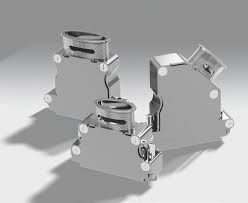
D‑Subminiature (“D‑Sub”) connectors have been around for decades, yet they keep showing up in new designs—from factory automation and test rigs to rugged vehicles, avionics subsystems, and even spaceflight-adjacent hardware. That longevity isn’t an accident. D‑Subs hit a sweet spot of compact size, predictable mechanics, broad availability, and serviceability.
But here’s the catch: most “D‑Sub problems” aren’t caused by the D‑Sub connector alone. They’re caused by the system around it—especially the backshell, cable termination method, shielding strategy, strain relief, and the way the assembly is installed and maintained.
This guide is written as a practical, engineering-focused checklist. It will help you choose the right D‑Sub and backshell combination, avoid common field failures, and build harnesses that survive real-world abuse.
1) Start with the “job to be done” (signals, environment, maintenance)
Before you pick part numbers, define these constraints:
- Signals & power
- Voltage/current per contact
- Signal type (low-level analog, digital, high-speed, differential pairs, RS‑232/485, CAN, etc.)
- Any RF/coax needs (often points to combo layouts rather than standard density)
- Environment
- Temperature range
- Vibration/shock profile
- Moisture, dust, chemicals, salt fog
- EMI/EMC exposure (near VFDs, motors, inverters, radios)
- Mechanical
- Cable diameter and stiffness
- Pull forces and bend radius constraints
- Space behind the panel (straight vs right‑angle exit)
- Operations
- How often it’s plugged/unplugged
- Who services it (technicians, operators, end users)
- Risk of mis-mating / wrong connector in the field
When you know the job, the connector selection becomes much more straightforward.
2) Understand D‑Sub naming (so you don’t order the wrong shell)
D‑Sub shells come in standard sizes, commonly referred to by letters (E, A, B, C, D). You’ll often see designations like:
- DE‑9 (often called “DB‑9” colloquially, but technically DE‑9 in standard density)
- DA‑15
- DB‑25
- DC‑37
- DD‑50
“High density” variants pack more contacts into the same shell (e.g., the VGA-style 15-pin high-density connector is often called HD‑15). Mixed-layout D‑Subs (combination D‑Subs) can include power contacts or coax contacts alongside signal contacts.
Practical tip: Don’t rely on slang names alone. Always confirm:
- Shell size
- Contact count
- Gender (pin vs socket)
- Mounting style
3) Choose the right contact style: crimp vs solder vs PCB
Crimp contacts (common in harnesses)
Best for: production harnessing, field reliability, vibration resistance
Pros:
- Repeatable, fast, scalable
- Strong in vibration when crimped with correct tooling
- Easier rework than solder cups in many harness shops
Watch-outs: - Requires correct crimp tool + locator + die set
- Poor crimps can look “fine” but fail later (intermittents)
Solder cup contacts
Best for: low-volume builds, bench prototypes, some serviceable assemblies
Pros:
- Minimal specialized tooling
- Easy to understand and inspect
Watch-outs: - In vibration environments, solder joints can crack if strain relief is poor
- Heat management matters (insulation recession, wicking, brittle joints)
PCB mount D‑Subs
Best for: instrument panels, embedded electronics, internal subassemblies
Pros:
- No external harness termination required at the connector
- Repeatable assembly with controlled processes
Watch-outs: - Mechanical stress transfers into the PCB—use board supports and proper panel mounting
4) Don’t treat the backshell as optional—it’s half the connector
A backshell isn’t cosmetic. It is the mechanical and EMC interface between the connector and the cable. It affects:
- Strain relief (prevents conductor fatigue and termination failures)
- Shield termination (EMI performance)
- Bend control (cable life)
- Environmental robustness (when used with gaskets, sealing hardware, or overmolding)
If you’re selecting parts now, start by browsing the connector + backshell ecosystem together rather than separately. A useful starting point is a consolidated range of D‑Sub Connectors and Backshells where you can see compatible options side-by-side:
D-Sub Connectors and Backshells
5) Picking the right backshell type (a practical breakdown)
A) Basic plastic hoods
Use when: benign environments, low EMI risk, minimal mechanical stress
Pros: low cost, easy assembly
Cons: limited shielding, often weaker strain relief
B) Metal backshells (EMI/RFI capable)
Use when: EMI matters, you have shielded cable, or you’re in industrial noise
Pros:
- Better durability
- Can support 360° shield termination methods (best practice for EMC)
- Better heat and abrasion tolerance
Cons: more cost, more components, careful assembly required
C) Right‑angle backshells
Use when: tight depth behind panel, cable needs to route sideways
Pros: solves packaging constraints
Cons: can increase stress at the exit if bend radius isn’t managed
D) Backshells with advanced strain relief
Look for options like:
- Cable clamps with proper grip range
- Integrated grommets
- Clamp bars for braided shields
- Provisions for heat shrink, boots, or potting
Rule of thumb: If the cable moves, pulls, or vibrates, invest in strain relief.
6) EMC/EMI reality: how to stop D‑Sub assemblies becoming antennas
If your system includes motors, drives, switching supplies, radios, or long cable runs, you should assume EMC matters. The most common shielding mistakes are easy to avoid:
Best practice: 360° shield termination (not a long pigtail)
- A long pigtail from shield braid to shell is effectively an inductor and can defeat shielding at higher frequencies.
- A proper metal backshell with clamp hardware can provide a much better shield-to-shell bond.
Make shielding a system decision
- Decide whether the shield should bond at one end or both ends (depends on grounding strategy, noise environment, and safety requirements).
- Ensure the chassis bonding path is low impedance and mechanically stable.
Common “it passes on the bench but fails on site” trap
A D‑Sub assembly might work in a clean lab, then fail near a VFD cabinet. Often the fix is:
- Better shield termination
- Shorter unshielded exposed conductors
- Better connector shell bonding to panel/chassis
7) Strain relief: what actually fails in the field
In the real world, D‑Sub failures are frequently:
- Broken conductors right behind the termination (fatigue)
- Intermittent contact due to micro-movement (“fretting”)
- Loose hardware causing partial disengagement
- Cracked solder joints (especially without proper cable support)
To prevent that:
- Use a backshell with a clamp sized for your cable OD
- Control the exit angle so the cable isn’t constantly bent at the connector
- Add a boot or heat shrink for bend support
- Avoid leaving long unsupported cable “lever arms” that vibrate
If you’re building harnesses for industrial machinery, vehicles, or aerospace-style vibration profiles, treat strain relief as a first-class requirement.
8) Hardware details that matter more than people expect
Jackscrews and retention
D‑Subs are often retained with jackscrews. That’s good—if they’re the right type.
- Confirm thread type: 4‑40 UNC is common, but metric variants exist. Mixing them can strip threads and create intermittent connections.
- Consider using captive screws if frequent mating/unmating is expected.
- For high-vibration systems, think about thread-locking strategies that still allow service.
Panel mounting and grounding
- Ensure the connector is mechanically supported—don’t let the cable load carry the assembly.
- If EMI is important, check how the connector shell bonds to the panel (paint/finish can insulate; use proper grounding hardware if needed).
9) Contact plating, mating cycles, and “low level” signals
Plating choice is often a cost-versus-performance decision:
- Gold plating is commonly used where low contact resistance and stable performance over time matter (especially for low-level signals).
- Tin plating can be fine in many applications but may be more sensitive to fretting/corrosion in some environments.
Also consider:
- How many mating cycles you expect
- Whether connectors will sit unmated in storage (contamination risk)
- Whether cleaning/maintenance will occur in the field
If you’ve ever chased intermittent faults that disappear when the connector is re-seated, you’ve seen how important contact integrity can be.
10) Industrial vs “spaceflight-like” requirements: what changes?
You don’t need to be building a satellite to benefit from high-reliability practices. Many “spaceflight-like” considerations apply to harsh industrial systems too:
- Vibration/shock: prioritize crimp terminations + strong strain relief
- Material stability: choose durable shells and robust hardware
- Traceability: ensure known provenance for critical builds
- Consistency: standardize on a connector family and assembly process
Even in industrial contexts, the cost of a single intermittent fault can exceed the cost difference between “okay” and “robust” interconnect decisions.
11) A practical D‑Sub + backshell selection checklist
Use this when specifying parts:
Connector selection
- Shell size and contact count confirmed (standard vs high density)
- Pin vs socket and gendering correct for your system
- Contact termination type selected (crimp/solder/PCB)
- Current and voltage per contact validated
- Environmental needs considered (sealed variants if required)
- Mounting style correct (panel mount, PCB mount, flange type)
Backshell selection
- Cable OD and exit direction confirmed (straight/right-angle)
- Strain relief method appropriate for pull/vibration
- EMC strategy defined (shielded cable? 360° termination?)
- Shell-to-backshell continuity ensured if shielding matters
- Clearance behind panel validated (depth and bend radius)
Assembly and test
- Correct tooling and process for crimps (if crimped)
- Visual inspection criteria defined (pull test where appropriate)
- Continuity + insulation tests planned
- Labeling and keying strategy to prevent mis-mating
- Installation torque guidance for jackscrews and clamps
12) Common mistakes (and how to avoid them)
Mistake 1: “Any hood will do”
Fix: Match backshell to environment and cable mechanics. If EMI or vibration exists, choose accordingly.
Mistake 2: Pigtail shield grounding for noisy environments
Fix: Use a metal backshell and clamp hardware for better shield termination, where appropriate.
Mistake 3: Ignoring jackscrew thread compatibility
Fix: Standardize thread types in your BOM and spares.
Mistake 4: No bend management
Fix: Ensure the cable exit doesn’t violate bend radius; add boots/heat shrink support.
Mistake 5: Using the wrong process for the build volume
Fix: For production harnessing, crimp contacts with proper tooling and inspection. For prototypes, solder cups may be okay if strain relief is robust.
13) Sourcing and support: why authorised distribution still matters
For high-reliability designs, sourcing isn’t just procurement—it’s part of engineering risk management. Buying through an authorised channel can help with:
- Correct part selection across families and variants
- Documentation and traceability expectations (where applicable)
- Consistency across production runs
- Avoidance of counterfeit or out-of-spec parts in sensitive builds
If you’re building with Positronic connector families, Jacarem notes that they have been a Positronic Distributor since the company began in 1987, reflecting long-term specialization in this connector category:
Positronic Distributor
(That heritage is also echoed in their branding—Jacarem’s logo is shaped like a D‑Sub, a nod to how central this connector family has been to their work across industrial and high-reliability applications.)
14) Bottom line: make the interconnect a designed system
A D‑Sub connector is rarely the weak link by itself. The weak link is usually one of these:
- Poor strain relief
- Poor shield termination
- Misaligned mechanical constraints (tight bends, cable pull)
- Inconsistent assembly practices
- Loose retention hardware
If you treat the D‑Sub + backshell + cable + grounding as a single engineered subsystem, you’ll get what D‑Subs are famous for: dependable performance, easy service, and long lifecycle availability.
Quick-fire take-aways
If you only remember three things:
- Select the backshell as carefully as the connector.
- Design for strain relief and shielding as a system.
- Standardize your assembly process and hardware details.
Do that, and D‑Sub connectors will keep earning their reputation—whether you’re building industrial equipment that runs 24/7 or high-reliability systems where an intermittent fault is unacceptable.

