
Water Damage Restoration: From Emergency to Full Recovery
Water damage can escalate quickly, turning a minor issue into a major disruption. Whether caused by a burst pipe or an appliance failure, the key to minimizing loss is acting fast. Many homeowners rely on trusted providers like HRS Restoration Services to guide them through the recovery process and restore their homes safely.
Understanding what happens from the moment water damage occurs to full recovery can help you respond with confidence and avoid costly mistakes.
Why Immediate Action Matters
Here is why speed is critical. Water spreads rapidly through porous materials such as drywall, wood, and insulation. Within hours, these materials begin to weaken. Within 24 to 48 hours, mold can start to develop in damp conditions.
The Federal Emergency Management Agency notes that mold growth can begin within that short timeframe after water exposure. That makes early intervention one of the most important steps in the restoration process.
Step 1: Emergency Response and Safety
The first phase focuses on safety and damage control.
If water damage occurs, take these immediate steps:
- Shut off the main water supply if possible
- Turn off electricity in affected areas
- Avoid contact with contaminated water
- Remove valuables and important items
These actions help reduce risk while you prepare for professional assistance.
Step 2: Damage Assessment
Let’s break it down. Before any cleanup begins, professionals assess the extent of the damage. This step determines how far water has spread and what materials are affected.
Experts use tools such as moisture meters and thermal imaging to detect hidden water behind walls and under flooring. This ensures no moisture is overlooked.
A thorough assessment also helps create a clear restoration plan.
Step 3: Water Removal
Next steps involve removing standing water as quickly as possible. Restoration teams use industrial pumps and vacuums to extract water from affected areas.
Fast water removal helps:
- Prevent structural damage
- Reduce drying time
- Limit the risk of mold growth
This step is often completed within hours, depending on the severity of the damage.
Step 4: Drying and Dehumidification
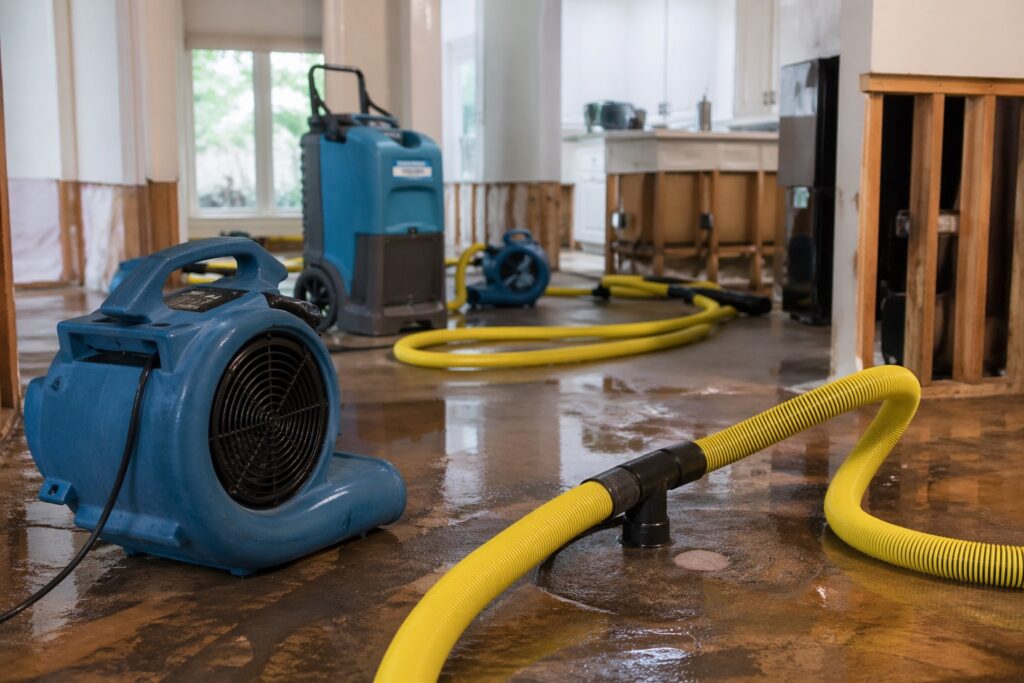
Even after visible water is removed, moisture remains trapped in materials. This stage focuses on drying the structure completely.
High-powered air movers and dehumidifiers are used to:
- Remove moisture from walls and floors
- Stabilize indoor humidity levels
- Prevent secondary damage
The Environmental Protection Agency emphasizes that controlling moisture is essential to preventing mold and maintaining healthy indoor air quality.
Step 5: Cleaning and Sanitizing
Water damage is not just about moisture. It can also introduce contaminants, especially in cases involving sewage or flooding.
During this phase, professionals:
- Clean affected surfaces
- Disinfect to remove bacteria
- Eliminate odors caused by moisture
This step ensures the home is safe for occupants.
Step 6: Repairs and Full Recovery
The final stage restores the home to its original condition.
This may include:
- Replacing damaged drywall or insulation
- Repairing flooring
- Repainting and finishing surfaces
At this point, the goal is not just repair, but full recovery. A well-executed restoration returns both function and comfort to the home.
Common Challenges During Restoration
Water damage restoration is not always straightforward. Several factors can complicate the process:
- Hidden moisture behind walls or under flooring
- Delayed response, which increases damage
- Improper drying, leading to mold growth
- Structural damage that requires extensive repairs
Working with experienced professionals helps address these challenges early.
Preventing Future Water Damage
Prevention plays a major role in protecting your home long term. Here are practical steps you can take:
- Inspect plumbing regularly
Check for leaks under sinks and around fixtures. - Maintain appliances
Replace hoses and inspect connections for wear. - Clean gutters and downspouts
Ensure water flows away from your home. - Seal foundation cracks
Prevent water from entering lower levels. - Monitor indoor humidity
Keep levels below 60 percent to reduce moisture buildup. - Install leak detection devices
Early alerts can prevent major damage.
These small actions can significantly reduce your risk.
When to Call a Professional
Some water issues can be handled with basic cleanup, but larger problems require professional expertise.
Call a restoration service if:
- Water has soaked into walls or flooring
- There is visible mold growth
- The source involves contaminated water
- The affected area is large
Professionals have the tools and training to fully dry and restore your home, reducing long-term risks.
Moving from Emergency to Recovery
Water damage can feel overwhelming, but the process becomes manageable when you understand each step. From the initial emergency response to final repairs, every phase plays a role in protecting your home.
Acting quickly, addressing hidden moisture, and following a structured restoration plan are key to a successful recovery.
If you find yourself dealing with water damage, working with experienced providers like HRS Restoration Services can help ensure a smooth transition from emergency to full recovery.

