
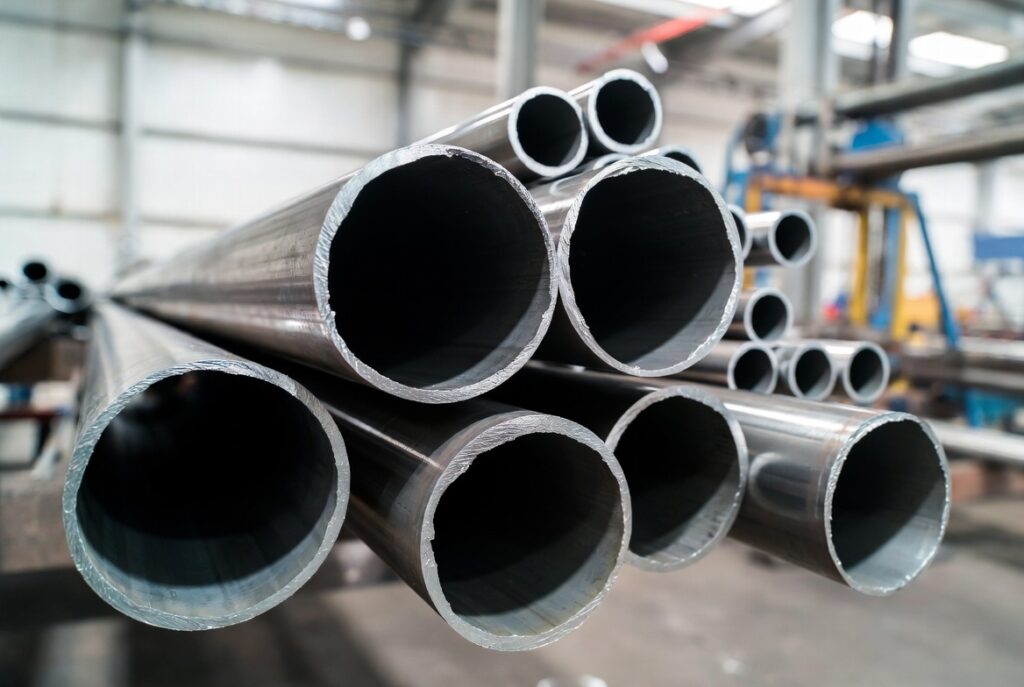
Steel tubes play an important role in hydraulic systems, industrial machinery, automotive parts, construction equipment, energy projects, and many OEM manufacturing processes. A steel tube may look simple, but the wrong choice can cause leakage, poor assembly, short service life, safety risks, and higher maintenance costs.
For buyers, engineers, and sourcing teams, choosing the right steel tubes means more than comparing diameter and price. You need to understand working pressure, material grade, tolerance, surface condition, strength, corrosion protection, and supplier capability.
This guide explains how to choose steel tubes for industrial equipment and hydraulic applications in a practical way. It will help buyers make better purchasing decisions and avoid common sourcing mistakes.
Why Steel Tubes Matter in Industrial Equipment
Industrial equipment usually works under pressure, vibration, load, friction, dust, humidity, or continuous operation. In these conditions, ordinary tubing may not provide enough strength, dimensional accuracy, or surface stability.
High-quality steel tubes help machines run safely and consistently. In hydraulic cylinders, steel tubes support pressure transmission and sealing performance. In mechanical equipment, they help maintain structural strength and machining accuracy. In automotive and engineering machinery, stable tube quality supports repeatable production.
Even in related products such as a CNG tube, galvanized steel pipe, or alloy steel tube, the same principle applies: the tube must match the real working environment.
When buyers select steel tubes correctly, they reduce downtime, lower replacement costs, and improve the reliability of the final equipment.
Understanding the Role of Steel Tubes in Hydraulic Systems
Hydraulic systems use pressurized fluid to transfer power. That means every hydraulic steel tube must handle pressure safely while keeping the fluid path clean, stable, and leak-free.
A weak tube, rough inner surface, poor tolerance, or unsuitable material can damage seals and reduce system efficiency. In hydraulic applications, tube quality affects oil flow, pressure resistance, sealing performance, and equipment life.
Hydraulic applications often require:
- Smooth inner surfaces for stable oil flow
- Tight dimensional tolerance for fitting and sealing
- Strong wall thickness control for pressure resistance
- Good straightness for easy assembly
- Clean surfaces to reduce contamination
- Reliable anti-rust protection during storage and shipping
A hydraulic steel tube is not just a pipe for fluid movement. It is a precision component that affects the performance of the whole hydraulic system.
Common Types of Steel Tubes Used in Industrial Applications
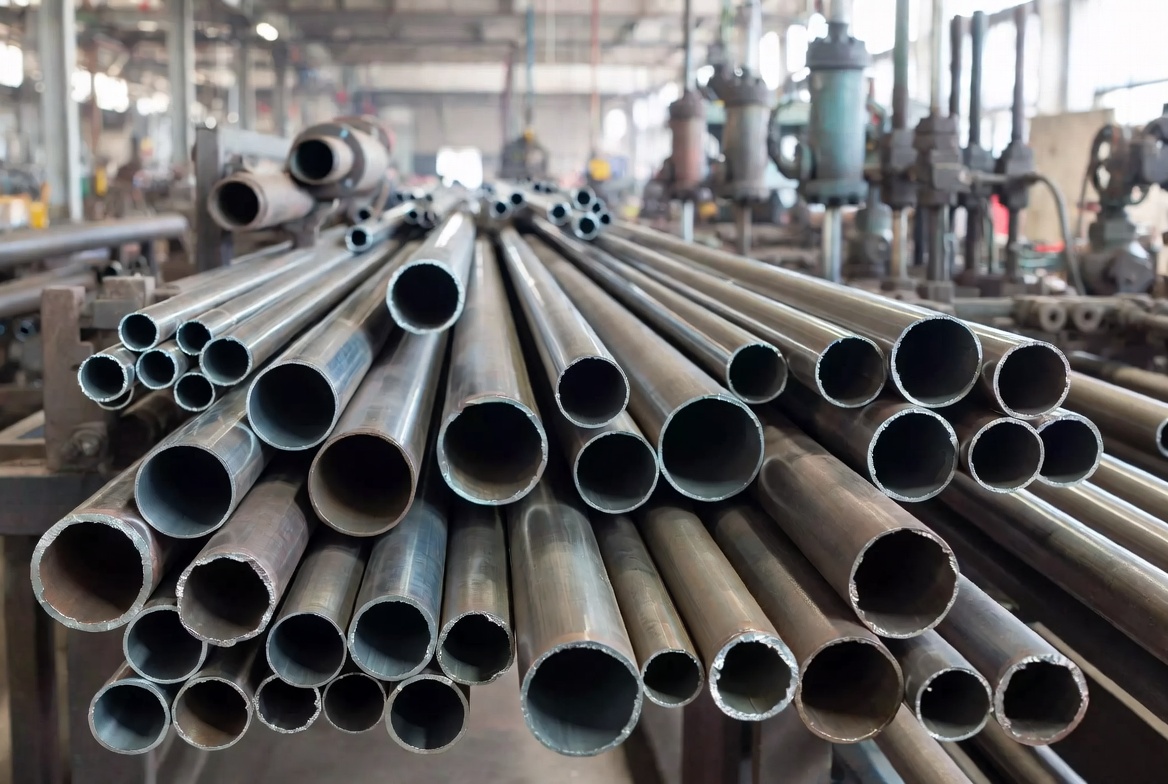
Different industrial applications require different tube types. The best choice depends on pressure, load, environment, processing method, and budget.
| Tube Type | Main Features | Common Applications |
| Seamless steel tube | No welded seam, strong pressure performance | Hydraulic systems, mechanical parts, pressure equipment |
| Welded steel tube | Cost-effective and widely available | Structural frames, general fabrication, low to medium pressure use |
| Cold drawn steel tube | High dimensional accuracy and smooth surface | Hydraulic cylinders, automotive parts, precision devices |
| Stainless steel tube | Strong corrosion resistance | Chemical equipment, food machinery, marine or humid environments |
| Galvanized steel pipe | Zinc coating for corrosion protection | Outdoor piping, support structures, humid environments |
| Alloy steel tube | Higher strength or wear resistance | Heavy machinery, high-load mechanical components |
Some buyers also source aluminum tube, aluminum alloy pipe, anodized aluminum tube, aluminum telescopic pole, aluminum tent pole, or telescopic extension pole for lightweight structures. These products are different from steel tubes, but the selection logic is similar: match the material to the load, environment, and function.
Seamless Steel Tubes vs Welded Steel Tubes
One of the most important decisions is whether to choose seamless steel tubes or welded steel tubes.
A seamless steel tube is produced without a welded seam. Because it has no weld line, it usually provides better pressure resistance and more uniform strength. This makes it suitable for hydraulic applications, high-pressure systems, mechanical components, and safety-related equipment.
A welded steel tube is made by forming steel strip and welding the seam. It can be a practical option for structural use, general industrial fabrication, and applications where cost efficiency matters more than high pressure resistance.
Choose seamless steel tubes when the project requires pressure resistance, safety, tight tolerance, or high reliability. Choose welded steel tubes when the application is less demanding and the design allows welded tubing.
The best decision should always follow the working pressure, standard, material grade, and inspection requirement.
Cold Drawn Steel Tubes: Why Precision Matters
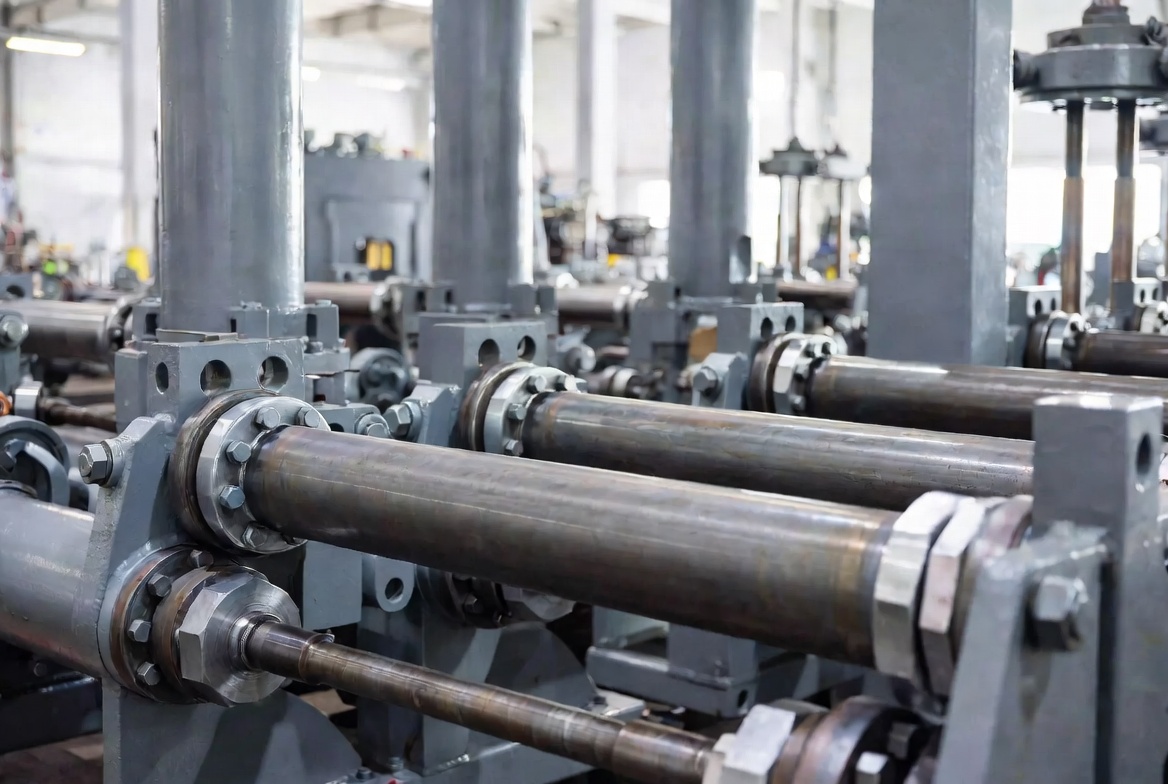
A cold drawn steel tube is processed through a die at room temperature to improve size accuracy, surface quality, straightness, and mechanical performance. For industrial buyers, this process matters because many machines require tubes that fit precisely with seals, shafts, bearings, fittings, and other components.
Cold drawn steel tubes are widely used in hydraulic cylinders, automotive parts, precision machinery, and equipment manufacturing. They can reduce extra machining work and improve assembly efficiency.
If your application requires a stable inner diameter, accurate outer diameter, clean surface, or consistent wall thickness, a cold drawn steel tube is often a better choice than a general-purpose tube.
Precision may increase the purchase cost, but it can save money by reducing rework, leakage, and assembly failure.
Key Material Grades for Industrial Steel Tubes
Material grade affects strength, hardness, weldability, machinability, toughness, and corrosion resistance. Buyers should never choose steel tubes only by size. The material must support the working condition.
Common material choices include:
- Carbon steel tubes for general hydraulic, mechanical, and structural applications
- Alloy steel tube options for higher strength, wear resistance, or heavy-duty performance
- Stainless steel pipe and stainless steel tube products for corrosion-sensitive environments
- Low-carbon precision tubes for bending, forming, or machining applications
If the tube will be welded, bent, machined, or heat-treated, the material grade becomes even more important. A reliable supplier should help buyers confirm chemical composition, mechanical properties, delivery condition, and standard requirements before production.
How Tube Strength Affects Equipment Performance
Tube strength affects how the product performs under load, pressure, vibration, and impact. In industrial equipment, weak or inconsistent tubing may deform, crack, leak, or fail during operation.
Important strength-related factors include:
- Tensile strength
- Yield strength
- Elongation
- Hardness
- Wall thickness
- Heat treatment condition
- Fatigue resistance
For high-load equipment, alloy steel tube may provide better performance. For precision hydraulic systems, strength must work together with accuracy and surface finish.
The strongest tube is not always the best tube. The right tube is the one that matches the design load, safety factor, processing method, and working environment.
Pressure Resistance Requirements for Hydraulic Applications
Pressure resistance is a key requirement for hydraulic applications. A hydraulic steel tube must handle normal working pressure, pressure peaks, vibration, and long-term fatigue.
Buyers should confirm the pressure requirement before choosing material, wall thickness, and tube type. For high-pressure hydraulic lines and cylinders, seamless steel tube is often preferred because it offers better pressure performance.
For moderate-pressure applications, welded or cold drawn welded tubes may also work if they meet the correct standard and testing requirement.
Before placing an order, confirm:
- Working pressure
- Maximum pressure
- Wall thickness tolerance
- Material grade
- Tube standard
- Testing method
- Safety requirement
This step protects both the buyer and the final equipment user.
Dimensional Accuracy and Tolerance Considerations
Dimensional accuracy determines whether the steel tube fits correctly during assembly. Poor tolerance can cause leakage, loose fitting, difficult machining, seal damage, or unstable performance.
Key tolerance points include:
- Outer diameter tolerance
- Inner diameter tolerance
- Wall thickness tolerance
- Straightness
- Ovality
- Length tolerance
- Surface roughness
For hydraulic cylinders, inner diameter and surface quality are especially important. For mechanical parts, outer diameter and wall thickness may affect machining accuracy.
For automated production, consistent tolerance helps improve repeatability and reduce quality variation between batches.
Surface Treatment Options for Better Corrosion Protection
Surface treatment protects steel tubes from corrosion and improves storage life, appearance, and processing performance. The right surface depends on the environment and application.
Common surface options include:
- Oiled surface for basic anti-rust protection
- Black phosphated surface for hydraulic tube applications
- Galvanized surface for humid or outdoor environments
- Bright annealed surface for clean appearance and better surface quality
- Painted or coated surface for additional protection
- Stainless surface for naturally better corrosion resistance
A galvanized steel pipe or galvanized seamless steel tube can perform better in humid environments because the zinc layer helps protect the base metal.
For export orders, buyers should also confirm anti-rust oil, waterproof wrapping, plastic caps, bundle protection, and shipping marks.
Choosing Steel Tubes Based on Working Environment
The working environment should guide the final tube choice. A tube used indoors in a clean factory does not need the same protection as a tube used outdoors, near moisture, or in corrosive conditions.
Use this simple selection logic:
- High pressure: consider seamless steel tube or qualified hydraulic steel tube
- High precision: consider cold drawn steel tube
- Corrosive environment: consider stainless steel tube or surface coating
- Outdoor use: consider galvanized steel pipe or protective coating
- Heavy load: consider alloy steel tube
- Lightweight structure: consider aluminum tube or aluminum alloy pipe
- Telescopic application: consider telescopic pipe or telescopic extension pole materials based on load and surface finish
The more demanding the environment, the more important material selection and quality inspection become.
Quality Inspection Points Before Purchasing Steel Tubes
Quality inspection helps buyers avoid hidden problems before tubes enter production. A professional supplier should provide clear inspection processes and documents.
Check these points before purchasing:
- Chemical composition
- Mechanical properties
- Outer and inner diameter
- Wall thickness
- Straightness and ovality
- Surface defects
- Inner surface cleanliness
- Pressure or leakage testing if required
- Ultrasonic, eddy current, or other non-destructive testing when needed
- Mill test certificate and batch traceability
Inspection is especially important for hydraulic steel tube, seamless steel pipe, stainless pipe, and precision tubes used in safety-related equipment.
Buyers should not rely only on photos or price lists. A proper inspection process helps reduce quality risk before shipment.
Common Mistakes Buyers Make When Selecting Steel Tubes
Many sourcing problems happen because the buyer does not define the application clearly. Common mistakes include:
- Choosing only by low price
- Ignoring pressure requirements
- Using welded tube when seamless steel tube is required
- Not checking wall thickness tolerance
- Forgetting inner surface quality for hydraulic systems
- Choosing the wrong material grade
- Ignoring corrosion protection
- Not asking for quality certificates
- Comparing suppliers without checking standards
- Not confirming packaging for export shipping
Another common mistake is mixing unrelated product requirements in one inquiry. For example, closed die forging parts, open die forging parts, and forging small parts follow different production and quality rules from steel tubes.
If buyers need both tubes and forging parts, they should list each product specification separately. This makes quotation, production, inspection, and delivery more accurate.
How to Evaluate a Reliable Steel Tube Supplier
A reliable steel tube supplier should do more than offer a low price. The supplier should understand industrial applications, explain technical details, and provide stable quality.
When evaluating a supplier, check whether they can provide:
- Relevant steel tube product range
- Experience with hydraulic and industrial applications
- Clear standards and material grades
- Custom size and tolerance support
- Surface treatment options
- Inspection reports and certificates
- Export packaging experience
- Fast and professional communication
- Real product photos, case references, or application examples
For example, PipeCW focuses on steel tube and industrial metal product solutions for buyers who need reliable materials for manufacturing and engineering applications.
A strong supplier should help you reduce risk before production starts. If a supplier cannot explain tolerance, surface treatment, testing, or material grade, the project may face quality problems later.
Final Checklist for Choosing the Right Steel Tubes
Before confirming an order, prepare a clear technical specification. This makes communication faster and reduces mistakes.
Use this checklist:
- Application: hydraulic, mechanical, automotive, structural, or other use
- Tube type: seamless steel tube, welded steel tube, cold drawn steel tube, or stainless steel tube
- Material grade: carbon steel, alloy steel tube, stainless steel, or other grade
- Size: outer diameter, inner diameter, and wall thickness
- Tolerance: OD, ID, wall thickness, straightness, and length
- Surface: oiled, galvanized, phosphated, bright, coated, or stainless
- Pressure requirement: working pressure and safety requirement
- Standard: ASTM, EN, DIN, JIS, GB, or project-specific standard
- Testing: mechanical testing, pressure testing, ultrasonic testing, or other inspection
- Certificate: mill test certificate and batch traceability
- Packaging: anti-rust protection, bundle method, labels, and export packing
- Quantity: sample order, batch order, or long-term supply plan
When comparing quotations, buyers should not only compare unit price. They should compare standards, tolerance, testing, delivery condition, packaging, and supplier experience. Working with a professional steel tube supplier in China can help international buyers source suitable tubes for hydraulic, industrial, and mechanical applications.
Conclusion
Choosing steel tubes for industrial equipment and hydraulic applications requires careful thinking. Buyers should not focus only on diameter, wall thickness, or price. A better decision comes from understanding the application, working pressure, material grade, tube type, tolerance, surface treatment, inspection method, and supplier capability.
For high-pressure hydraulic systems, seamless steel tubes and cold drawn steel tubes often provide better reliability. For corrosion-sensitive environments, stainless steel tube, stainless steel pipe, or galvanized steel pipe may be more suitable. For heavy-duty machinery, alloy steel tube can support stronger performance. For lightweight structures, aluminum tube, aluminum alloy pipe, or anodized aluminum tube may be better options.
The right steel tube improves safety, reduces downtime, supports accurate assembly, and helps industrial equipment work longer. When buyers define the requirements clearly and work with a supplier that understands technical applications, they can choose steel tubes with more confidence and build more reliable equipment.

