| Quick Answer |
| Bending accuracy is not solely determined by tonnage. In batch production, the true factors that affect the results are usually angle consistency, flange size repeatability, and full-length angle consistency of long workpieces. These results are also affected by material fluctuations, tooling matching, frame rigidity, crowning (deflection compensation), backgauge repeatability, and program settings. When purchasing bending equipment, if we only consider tonnage, length, and price and ignore these factors, we are often prone to more trial bending, rework, and batch instability in subsequent production. |
| The “bending accuracy” mentioned in this article should be divided into at least two levels: one is angle accuracy and angle consistency, and the other is flange dimension accuracy and size repeatability. In actual production, although these two types of results are related to each other, the influencing factors are not completely the same. Therefore, when evaluating equipment, such as in a comparison of Hybrid Servo Press Brake vs Hydraulic Press Brake, it is not enough to use a general “high accuracy” to summarize. |
1. Introduction
|
| Many factories only focus on tonnage, working length, and price when purchasing bending equipment. Although these are equally important, they are far from enough. In actual production, what really affects profits is whether this machine can maintain stability in batch production. Bending accuracy is essentially not determined by a single parameter, but is rather the result of the combined action of materials, tooling, machine structure, compensation, and program settings. |
2. Why bending accuracy is a system result, not just a machine number
|
First piece perfection does not necessarily mean batch stability
|
| A perfect first piece produced during the trial run does not mean that the machine can still maintain a high degree of repeatability during batch production, such as on the 20th or 50th piece. In actual production, angle drift and flange dimension drift are the most headache inducing issues. So, the capability of a press brake mainly depends on its stability during continuous operation, rather than just whether the accuracy of a single piece meets tolerance. |
Accuracy depends on the combined action of materials, tooling, machines, and settings
|
| Bending accuracy is not determined by a single parameter; it is the result of the combined effects of material thickness fluctuations, strength changes, tooling matching, backgauge repeatability, crowning compensation strategy, and operator program settings. |
3. In actual production, what usually causes a decrease in bending accuracy
|
Material fluctuations are often underestimated
|
| In actual production, there may be differences in thickness tolerance, yield strength, tensile strength, hardness condition, and springback characteristics among different materials, and even different batches of the same material. For example, stainless steel, aluminum, and ordinary carbon steel have different hardness and springback behavior, so the bending results are different. However, for the same stainless steel, there may be significant differences between different grades, hardness states, and batches. Therefore, factories cannot simply set parameters based on ideal materials, but must respond to material fluctuations through trial bends, compensation, batch validation, and other means. |
Tooling mismatch can lead to hidden instability
|
| The V-die opening and the punch tip radius can also affect bending accuracy. If the V-die opening is too small, it may increase the tonnage requirement and increase the risk of surface indentation; if the V-die opening is too large, it may increase the inside radius and reduce flange dimension and angle control. In the industry, we usually use 8 to 10 times the material thickness (V=8T-10T) as the common empirical rule for V-die opening selection. If the selected V-die opening deviates too far from this range, it may not only affect accuracy, but may also increase the load on the machine during operation and potentially cause damage. |
| An excessively large or small punch tip radius can also cause unstable material stress, resulting in poorer angle and dimensional accuracy. Therefore, when selecting tooling, we should not only consider whether it can be installed, but also whether it matches the material thickness, target inside radius, minimum flange length, and bending method. In addition, the manufacturing accuracy, wear condition, and clamping consistency of the tooling itself will directly affect batch stability. |
Lack of standardization in operation and setting
|
| Even if a machine is good, non-standard control processes can still lead to repeatability problems. The program settings are not unified, backgauge calibration is unstable, and there is no verification after changing materials, tooling, and batches, which may cause drift in angles and dimensions. |
4. Why does equipment selection directly affect rework, not just parameter performance
|
When processing long workpieces, the rigidity of the frame and compensation logic are crucial
|
| When processing long workpieces, the load on the frame becomes more obvious, and the worktable may undergo slight deflection, resulting in inconsistent angles between the middle and ends of the workpiece. A high-rigidity frame combined with a CNC crowning system can effectively improve this problem. If your workshop mainly produces long workpieces, or if customers have high requirements for the consistency of workpiece angles, then when purchasing, it is necessary to focus on the machine’s crowning capability. For more details and solutions, you can visit raymaxtech .com |
Backgauge repeatability is the key foundation for dimensional consistency
|
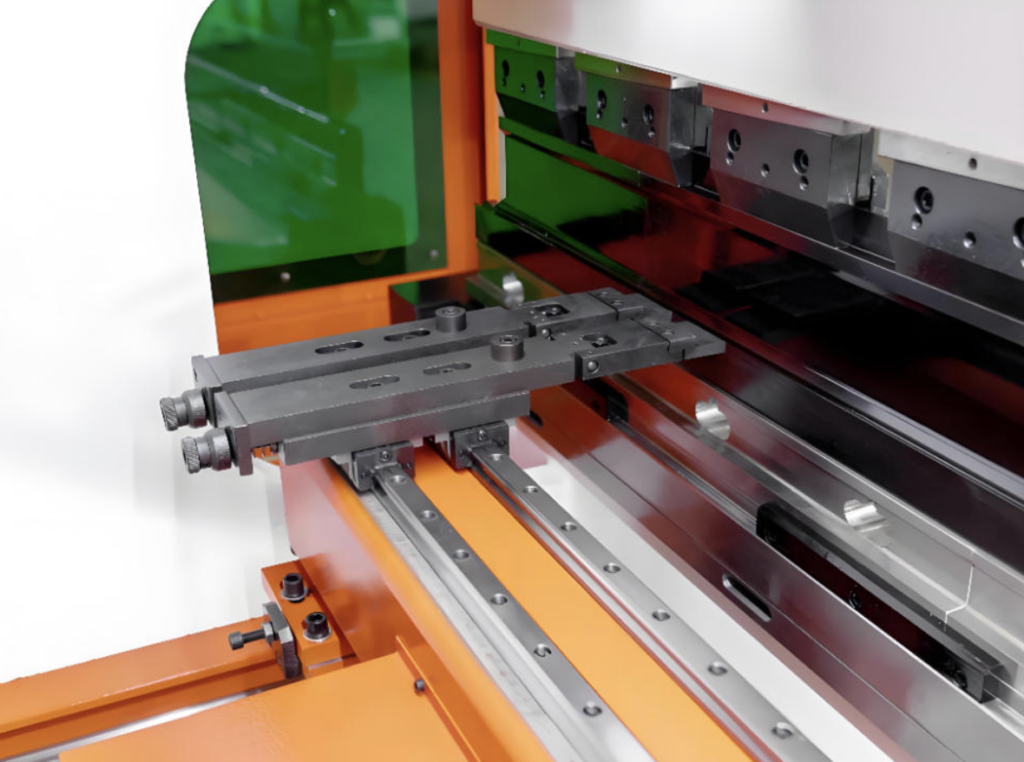
| The ability of machines to release a lot of pressure does not necessarily mean that the size is stable. The key to many flange dimension problems lies in backgauge repeatability. An excellent backgauge system can achieve precise and repeatable positioning, which is particularly important for batch production of parts. |
Equipment with a higher degree of standardization can shorten setup time
|
| The value of an excellent machine is reflected in multiple aspects. A high-precision CNC system combined with standardized tooling can enable the machine to enter a stable state faster, reduce the number of trial bends, reduce reliance on the experience of skilled operators, and make it easier to achieve process standardization. |
5. A practical evaluation checklist before purchasing bending equipment
|
|
| ① What is your typical material and thickness range? |
| List the types of materials you commonly process, such as low-carbon steel, stainless steel, aluminum, etc., and their thickness ranges. This determines the required tonnage of the press brake, tooling selection, and whether an angle measurement system is needed to cope with material springback variation. |
| ② Do you value first piece or batch consistency more in your workpieces? |
|
| If you mainly do small-batch, multi-variety processing, then focus on first-part speed and changeover efficiency;If repeated batch production is your main workload, you need to pay more attention to the machine’s ability to maintain long-term batch consistency. |
| ③ Do you often make long or highly consistent parts? |
| If your workshop often produces long workpieces, or if customers have high requirements for the consistency of workpiece angles, it is necessary to focus on evaluating the machine’s frame rigidity and crowning capability. |
| ④ Is your existing tooling system standardized? |
| If there is no unified standard for the height, accuracy, clamping method, and calibration process of your tooling, then even the most high-precision press brake may not guarantee the stability of bending. |
| ⑤ Are you more afraid of angle drift or size drift? |
| If you are more concerned about angle drift, focus on the crowning capability and tooling; If you are more concerned about size drift, focus on backgauge repeatability. |
| ⑥ Are you buying “parameters” or “stable production capability”? |
| The nominal parameters of the machine can only tell us its theoretical capability, but the machine’s actual stable production capability is the most valuable reference for reducing trial bends, rework, and setup time. |
6. Conclusion
|
| Bending accuracy is not just a marketing number; it reflects the repeatability and stability of a machine. The rigidity of the frame, material condition, tooling matching, crowning capability, backgauge repeatability, and program settings can all affect the final bending accuracy. The more rational the selection process is, the less rework is likely to occur in actual production, and the more stable production will be. |