
Third-party logistics (3PL) companies may not always agree on what to invest in, but the need for modernization is clear. The more these businesses learn about the future of autonomous material handling, the better they can prepare their warehouses for the changes to come.
The Rise of Automatic Conveyance Systems
“Automatic conveyance system” is an umbrella term covering smart conveyors, sorters and automatic loading systems. These integrate with existing loading dock infrastructure. Fixed automation for moving goods reduces reliance on manual labor at critical transfer points. This technology maintains throughput during labor shortages.
How They Accelerate Unloading and Loading
By attaching robotic gripper technology to a loading dock’s standard telescoping conveyor, users can automatically unload heavy containers, mixed stock keeping unit (SKU) loads and oddly shaped boxes. This prevents physical strain and streamlines operations.
Why Loading Docks Need to be Streamlined
Truck loading and unloading are among the most physically demanding, time-consuming jobs in a warehouse. Robots can unload cases much faster.
Conveyance systems accelerate turnaround times. Given that 25% of 3PL professionals cite labor shortage concerns as the top factor leading them to consider automation solutions, reducing the need for manual intervention makes financial sense. Most warehouses are 10% to 25% understaffed, with material handlers and forklift drivers representing the largest labor gaps.
While this technology is particularly valuable for high-volume operations, 3PLs experiencing demand spikes can also benefit. Scalable automation helps warehouses adapt to demand fluctuations.
Integrating Them Into High-Volume Operations
While these systems are most effective at the loading dock, assess the facility’s layout and workflows to determine where they will have the greatest impact. Placement can impact traffic and throughput.
Operations managers must ensure downstream machinery can handle the increase in upstream throughput to avoid bottlenecks. If there is a mismatch, consider scaling up the slower equipment’s capacity, installing surge buffers or implementing a pull system.
Moving Goods With Driverless Transport Vehicle Equipment
Driverless transport vehicles can unload, transport and load materials without human intervention. For example, an autonomous forklift can stack heavy goods on multilevel racks, while automated pallet movers can stage palletized goods for outbound shipping.
These machines rely on algorithms, sensor arrays and cameras to process data in real time. They can either follow predetermined paths or adapt to changing layouts.
Driverless transport vehicles pair autonomous navigation with data-driven performance monitoring to optimize warehouse operations. Autonomous operation reduces labor costs while improving safety.
How Telematics Improves Performance
Autonomous fleets use telematics — wireless communication, internet-connected sensors and cloud computing technology — for monitoring and management. The technology enables vehicle-to-everything communication, route optimization and predictive maintenance.
Telematics provides real-time data on equipment performance, usage patterns and maintenance requirements. These efficiency gains lead to broader business benefits, helping to markedly increase customer retention, financial resilience and throughput.
Why This Information Is Crucial for 3PLs
Driverless transport vehicles lower labor expenses and enhance workplace safety by eliminating human error. The data they generate provides insights into workflow optimization.
Preparing for Data-Driven Fleet Management
A self-driving vehicle must understand its position relative to its surroundings. A map of the environment, LiDAR, cameras and proximity sensors provide spatial awareness.
Zone areas to separate employees from vehicle paths. Dirty sensors and broken lenses can keep vehicles from identifying their surroundings. Taking safety precautions can prevent these unlikely accidents.
Unifying Operations with Automated Mobile Robot Equipment
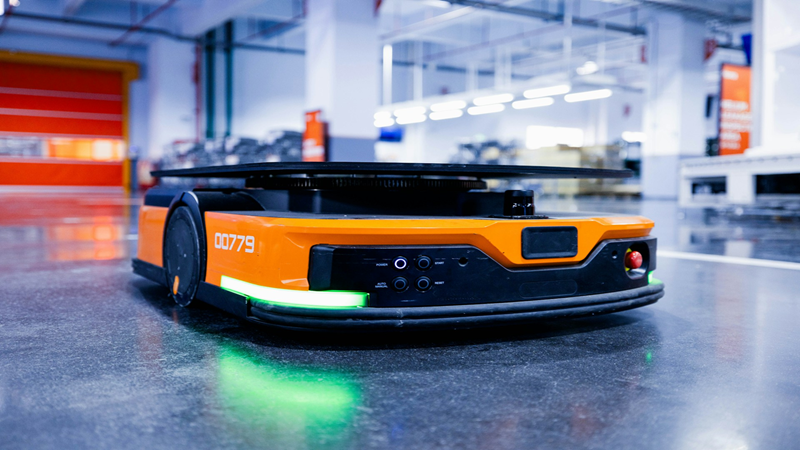
Automated mobile robots are similar to driverless transport vehicles, using 360-degree vision systems, facility layout data, sophisticated algorithms and sensors to navigate warehouses without fixed tracks or human supervision.
Automated mobile robots are flexible, intelligent systems that excel at navigating dynamic environments. Orchestration software enables multiple people to work together.
How They Optimize High-Volume Operations
These self-driving machines handle lifting, sorting and picking while identifying SKUs and routing items. Their versatility allows them to shift between tasks.
Their Impact on Storage and Picking Efficiency
By automating storage and picking, automated mobile robots improve efficiency. 3PLs can use them for order fulfillment or inventory management. Since they are immune to human error and don’t need breaks, they remain productive around the clock.
Logistics companies that have adopted multirobot orchestration software for mobile automation systems have increased storage capacity by up to 400%, picking accuracy by 99.9% and picking efficiency to more than 1,000 pieces per hour per station.
Implementing an Integrated Robotics System
Multirobot orchestration software centralizes routing and coordination to prevent collisions. It is crucial for companies with particularly large fleets or those leveraging robots from multiple vendors.
The need to connect these technologies with a single, cohesive solution is clear. Market research projects the material handling integration market will reach $77.61 billion by 2031, up from $53.46 billion in 2026. This represents a compound annual growth rate of 7.74%.
The Emergence of Humanoid Robots in Logistics
Humanoid robots can handle complex tasks that conventional robots struggle with, such as package sorting, kitting and case picking. Their form allows them to work in spaces designed for human workers.
This technology is an example of physical AI. Built-in models process environmental, visual and geospatial data in real time, enabling them to accomplish high-level tasks.
Humanoid robots are the cutting edge of autonomous material handling, bringing human-like versatility to warehouse operations. Their adaptability makes them valuable for a wide range of tasks.
How They Operate in Human-Centric Spaces
In addition to loading, picking and sorting, humanoids can execute a wide range of general-purpose tasks because they are not specialized for a single, narrow application.
Why 3PLs Should Invest in Humanoids
Everything from racks to pallets is designed for human height, dexterity and reach. Since these robots are built to resemble humans, minimal retrofitting is needed for implementation. 3PLs can funnel these savings into other emerging autonomous material handling solutions.
Preparing Facilities for Humanoid Integration
Humanoid robots work with standard shelving and existing automation zones. This drop-in advantage reduces capital expenditure and accelerates deployment. From picking and scanning to cleaning and maintenance, humanoids offer flexibility beyond traditional automation.
Operations teams should focus on modernizing the technology stack and training employees for robot collaboration. Preparing workers ensures smooth integration.
Preparing for Autonomous Material Handling Equipment Innovations
All eyes are on technologies like artificial intelligence, humanoid robotics and advanced cobots. Everyone wants to know which to invest in. In truth, no single automation solution will prevail. Success comes from diversification.
Assess the infrastructure, technology stack and vendor relationships to identify gaps before implementation. If there are mixed-vendor fleets or legacy technology, move quickly to take advantage of emerging autonomous material handling innovations.

